
Movement Prep: The Key to Injury-Free Workouts
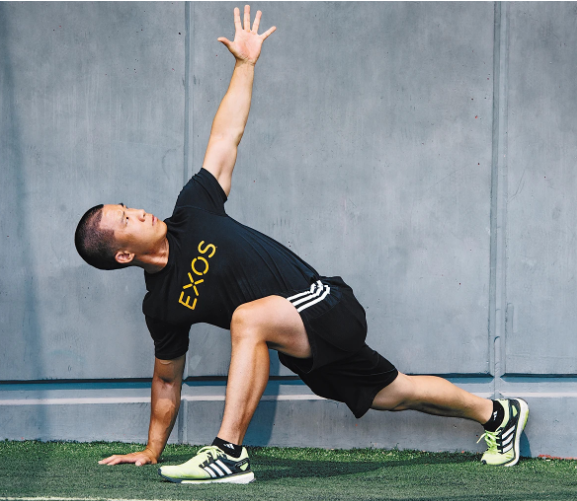
If you've trained at bStrong - or watched a session - you've probably noticed that we don't rush into the workout. Before the main lifts start, there's a focused block of movement that looks intentional, structured, and a little slower than you might expect.
That's Movement Prep. And it's not filler.
Why do we use Movement Prep before every session?
Movement Prep prepares your body and mind to train safely and effectively. It increases muscle temperature, primes the joints and tissues involved in the day's main lifts, gets blood flowing to the muscles that are about to work, and gives you a mental transition from whatever was happening before you walked in. It's not about doing extra work. It's about making the rest of the workout work better - and reducing the chance that small, avoidable issues turn into injuries or setbacks.
The physical side: what's actually happening
Movement Prep literally warms your body up. Increasing muscle temperature improves elasticity - which means your muscles and joints are better prepared to handle the range of motion and load you're about to place on them during strength work.
This matters more than most people realize. Muscles and connective tissue that are cold and stiff are more vulnerable to strains and small tweaks. A proper Movement Prep reduces that vulnerability by gradually preparing the tissues before asking them to handle serious load.
It also primes the cardiovascular system - getting your heart pumping and blood flowing to the specific muscles that are about to work. Think of it as giving your body a heads-up before the real demand starts. Skipping that signal and jumping straight into heavy compound work is a reliable way to feel off and move poorly in the early sets.
The morning angle and the desk worker angle are both real. If you're training first thing in the morning, your muscles genuinely need to wake up - joints that haven't been loaded yet that day need to find their optimal positioning before being stressed. If you're training after work, you've likely been sitting for hours, which shortens hip flexors, loads the lower back in a compressed position, and reduces thoracic mobility. Neither situation is ideal for immediately squatting or deadlifting heavy without preparation.
At bStrong, Movement Prep is designed around the compound movement of the day - squat, hinge, or press. The prep work targets the specific joints and tissues that movement will demand: ankle mobility for squat days, hip mobility and posterior chain activation for hinge days, shoulder and thoracic mobility for pressing days. It's not generic. It's matched to what you're about to do.
The mental side: the part most people underestimate
Strength training is a skill that requires focus and presence. Moving heavy weight well - with good timing, bracing, and control - isn't something you can do on autopilot while mentally still in a work meeting.
Movement Prep is your transition. It's the window between whatever was happening before you walked in and the session itself. Instead of jumping from emails, traffic, or a stressful conversation straight into squatting heavy weights, you get five minutes to get out of your head and into your body. To notice how you feel today. To start paying attention to how things are moving.
That shift matters more than most people expect. Members who treat Movement Prep as part of the workout - not a waiting period before it - consistently have better sessions than those who rush through it or skip it entirely.

Why skipping it usually backfires
This is the pattern we see with people who rush or skip Movement Prep:
Movement quality is lower in the first circuit, sometimes the whole session
Things feel stiff or "off" early, and instead of addressing it they push through
Small issues accumulate over time rather than resolving
Nagging soreness lingers longer than it should
Most injuries in training don't come from one dramatic moment. They come from being consistently unprepared - from repeatedly asking muscles and joints to do something they weren't ready for. Movement Prep is the preventive layer that keeps small issues from becoming setbacks.
The time argument doesn't hold up well either. A proper Movement Prep runs 5-7 minutes. The cost of skipping it regularly - in reduced session quality, slower recovery, and eventual injury - is far higher than the time saved.
What this looks like at bStrong
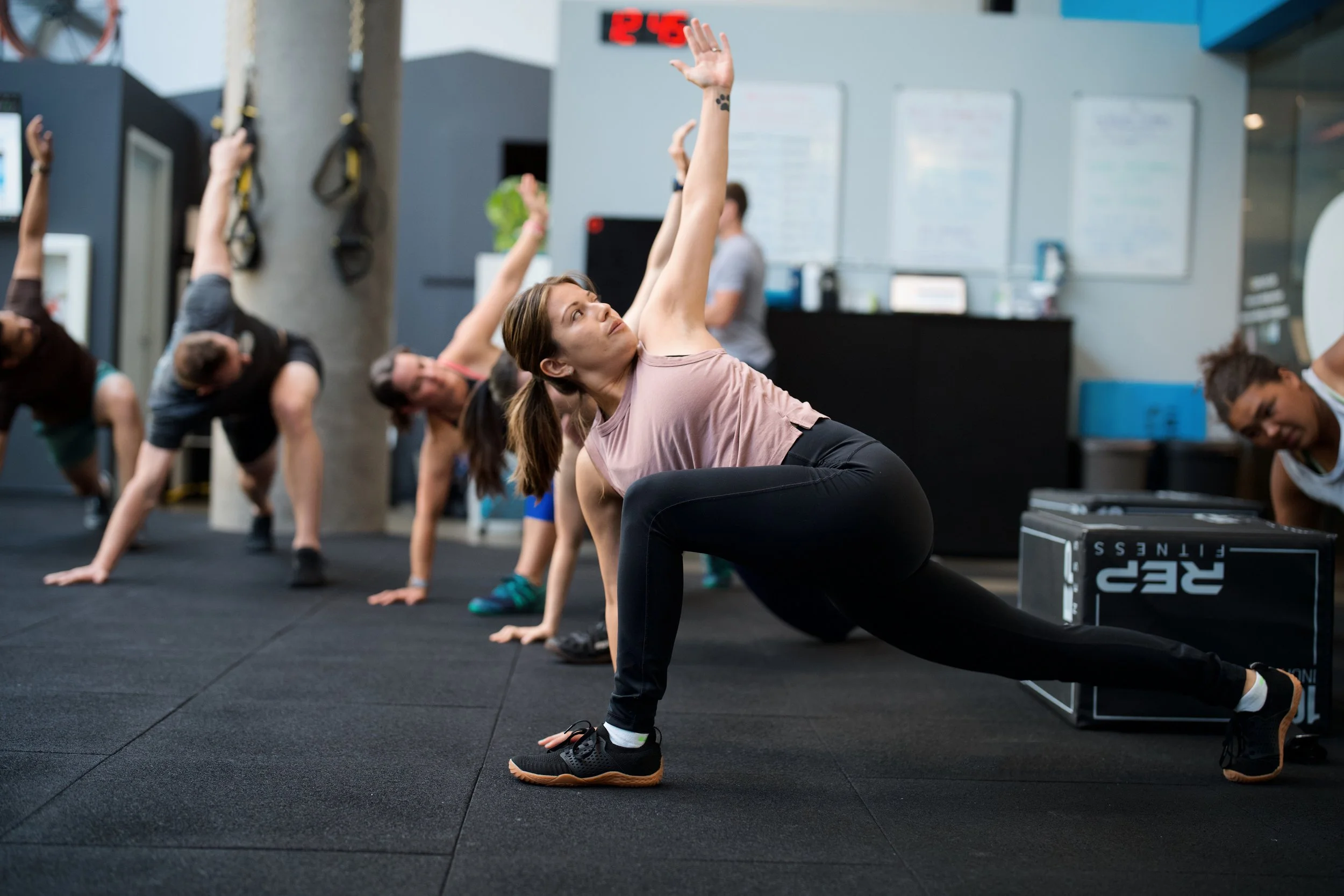
At bStrong in Bellevue and Redmond, every session starts with coached Movement Prep. It's built around the workout of the day, not a generic routine recycled from one session to the next.
Coaches lead the prep, explain why specific movements are included, and use it as a real-time check-in on how each member is moving and feeling. If something is tight or off - a hip that's not moving well, a shoulder that's pulling - that's information the coach uses to adjust loads, modify movements, or spend extra time on a specific area before the main work begins.
For new members, Movement Prep is also part of the learning curve. The patterns introduced in prep - the movement quality, the awareness of how different joints should feel, the bracing and positioning cues - carry directly into the main lifts. Learning to move well in prep makes learning to lift well significantly faster.
Frequently asked questions
Can I skip Movement Prep if I'm short on time?
You can, but your workout will almost always be worse for it - not just marginally, but noticeably. The first circuit typically feels stiffer, heavier, and less controlled. If you're regularly short on time, the better adjustment is arriving 5 minutes earlier rather than cutting prep. Movement Prep isn't separate from the workout - it's the first part of it.
Is Movement Prep just for beginners?
No - and if anything, it matters more as training gets more demanding. Beginner workouts are generally lighter and less demanding, which means the consequences of skipping prep are smaller. As loads increase and movements become more complex, the need for proper preparation increases alongside them. The coaches and more advanced members at bStrong take prep more seriously, not less.
What if something feels tight or off during Movement Prep?
That's exactly the right time to notice it and tell your coach. Movement Prep is when those signals are useful - when there's still time to modify the session appropriately. A hip that doesn't feel right during prep is information. The same hip feeling wrong halfway through a set of deadlifts is a problem. Use prep as a real check-in on how your body feels that day.
How is bStrong's Movement Prep different from a standard warm-up?
A standard warm-up is often generic - some cardio, some stretching, the same thing regardless of the day's workout. Movement Prep at bStrong is built around the compound movement of the session. Squat day prep targets ankle, hip, and thoracic mobility specifically. Hinge day prep targets the posterior chain. Press day prep targets shoulder and thoracic positioning. The specificity is what makes it effective rather than just a formality.
Does Movement Prep replace stretching or mobility work?
It covers a lot of what static stretching tries to do, but in a more functional way. Dynamic movement through range of motion - which is what Movement Prep does - is generally more effective preparation for strength training than static stretching, which can temporarily reduce force output when done immediately before heavy lifts. Dedicated mobility or flexibility work is still valuable, but it's better placed after sessions or on rest days.
How long does Movement Prep take?
Typically 4-6 minutes at bStrong, structured into the first part of the 50-minute session. It's not a separate time commitment on top of the workout - it's the opening block of every session.
Movement Prep is one of many things that separates coached training from figuring it out on your own. When someone else is building it into every session, explaining why specific movements are included, and adjusting based on how you're moving that day - it's not something you have to think about or skip when you're pressed for time.
Our 3-week trial is a practical way to experience what this feels like in practice. A consultation call, an Intro / Ramp Up session, 6 coached small group personal training workouts, an InBody scan, and practical nutrition resources - all for $99 at our Bellevue and Redmond locations.