
The Consistency System: How to Make Strength Training Stick
Most people don't fail at fitness because they can't work hard.
They fail because they can't stay consistent.
They start strong. They do well for a few weeks. Then they miss one session, then another, and before long it feels like they're back at zero.
That cycle isn't a character flaw. It's usually a structure problem.
The solution isn't more motivation. It's a better system.
Why is consistency more important than intensity in strength training?
Short answer: Two to three focused strength sessions per week done consistently over months produces better results than five sessions per week done for three weeks. Intensity matters - but only when you show up often enough for it to compound.
Most people overestimate what they can do in a week and underestimate what they can do in six months. Results don't come from one hard week. They come from repeating good-enough weeks over and over.
Public health guidance backs this up simply: adults are generally advised to do muscle-strengthening activity on two or more days per week, and some activity is better than none. The standard isn't perfection - it's showing up regularly.

Why do most people struggle to stay consistent?
The same patterns come up all the time.
They rely on motivation. Motivation is great for getting started. It's unreliable for carrying you through a long work week, a stressful month, or a season when life gets messy. The people who stay consistent long-term aren't more motivated than everyone else - they built a setup that doesn't depend on motivation.
They set the bar too high. Five days a week, hour-long sessions, perfect nutrition, no missed sessions. That plan works until real life shows up - which it always does. When the plan breaks, everything stops. A better system survives disruption.
They treat a missed workout like failure. Missing one session is normal. The problem is when one missed session turns into guilt, then avoidance, then "I'll start again next Monday." That pattern is what actually kills consistency.
They train without structure. If you have to figure out what to do when you get to the gym, you've already made the workout harder than it needs to be. That decision fatigue is exactly what gets people on tired days.
They don't track progress. If you can't see progress, it's harder to stay committed. That progress doesn't have to be dramatic - smoother reps, more confidence, better energy, weights slowly going up. It all counts.
What actually builds long-term consistency?
Three things work reliably.
Structure that removes decisions
The most consistent people we work with at our Bellevue and Redmond locations share one thing: they don't decide what to do when they arrive. The session is written, their weights are tracked from last week, and their job is to show up and follow the plan.
When a workout requires zero decisions at the door, the friction that kills consistency disappears.
A schedule that fits real life
Two to three sessions per week is enough for most busy adults. That's not a compromise - it's the sweet spot. Frequent enough to build momentum and make progress. Realistic enough to survive a busy week.
One thing that helps: think in training windows rather than perfect fixed times. "I train twice between Monday and Thursday" survives schedule changes better than "I train every Monday and Wednesday at exactly 6am." A little flexibility makes the routine more durable without sacrificing the structure.
Accountability that outlasts motivation
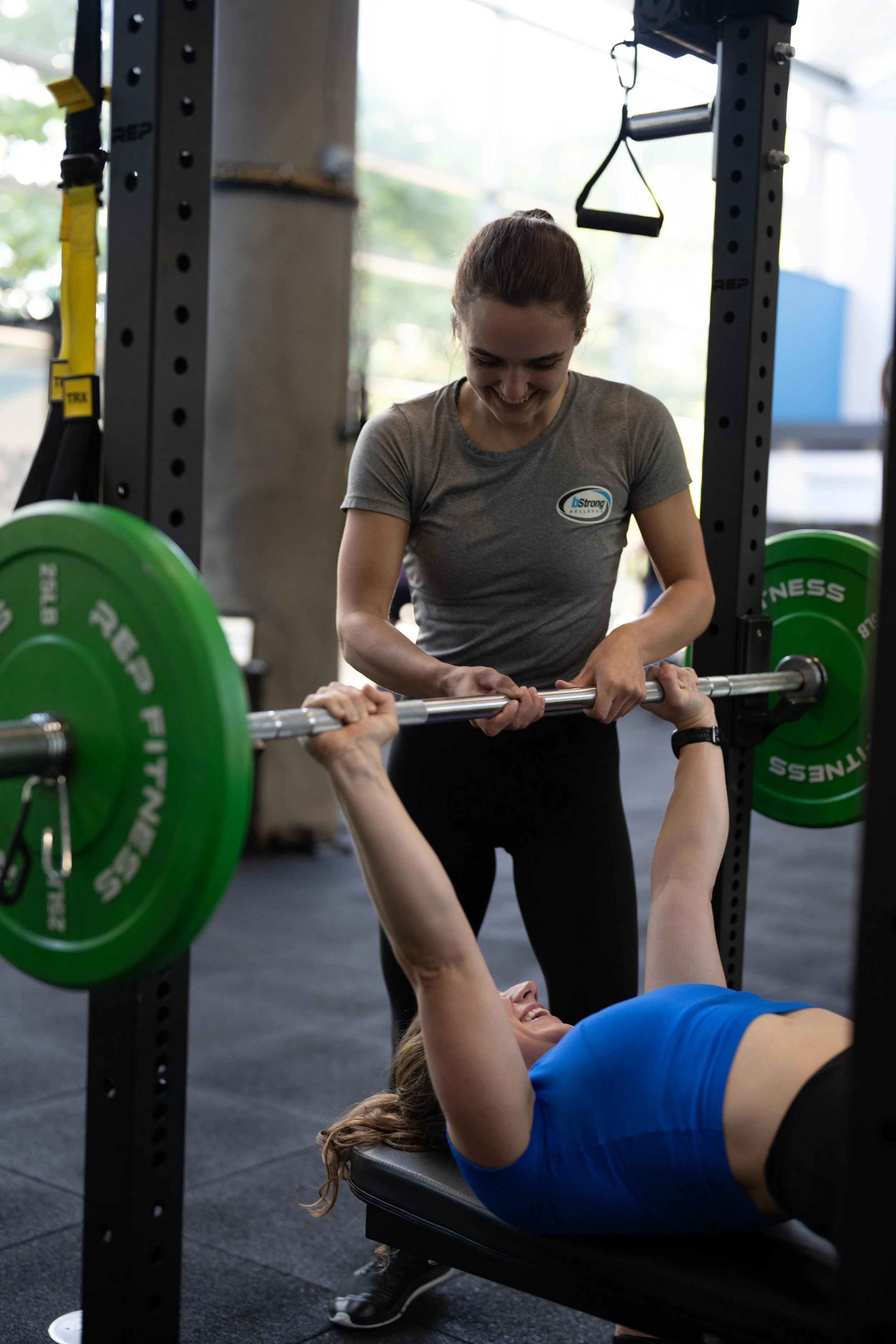
A coach who expects you, a small group that shows up, and a session that's already booked all do the same thing: they make not going harder than going.
Most people know the difference between vague plans to work out and an actual appointment. The appointment wins almost every time.
The 50-minute framework
At bStrong, every session is 50 minutes. Not because 50 is a magic number - because it's long enough to do meaningful work and short enough to fit a real schedule without taking over your day.
A good session looks like this:
Warm-up (5-8 min) - dynamic mobility and activation
Main strength block (30-35 min) - compound full-body movements
Conditioning or core (5-10 min) - short finisher for cardio and stability
Every part has a purpose. No wandering, no figuring out what to do next, no wasted time. You finish knowing what you accomplished and what you're building toward next session.
For more on how this fits a busy schedule, read our strength training for busy people guide.
How to build the habit in real life
Use habit anchors. Tie training to something that already happens in your week. "After school drop-off" or "before my first meeting" or "right after work before I go home" works better than waiting until you feel like it.
Treat sessions like appointments. A session you'd have to cancel on someone is harder to skip than one you quietly reschedule in your head. Pre-booking creates that commitment.
Track something small. You don't need a detailed training log. Even just noting the weight you used on your main lift gives you visible progress to point to over weeks and months.
Use the 10-minute rule. On days when you don't feel like going, commit to showing up and doing 10 minutes. Most of the time you'll finish the whole session. Sometimes you'll do 10 minutes and leave. Both outcomes beat not going.
Celebrate the habit, not just the outcome. Most people wait to feel proud until the scale changes or the mirror changes. That's too late. Showing up consistently is worth reinforcing on its own. That behavior is what creates the result.
What to do when you fall off
You will miss sessions. Everyone does. The question is what happens next.
The most consistent people aren't the ones who never miss. They're the ones who get back on track quickly without turning it into a big deal.
A few rules:
Don't try to make up missed sessions every time - just return to your normal schedule
Don't treat a missed week like failure - start close to where you left off and adjust the first session based on how you feel
Don't wait for the "perfect" week to restart
Accept that imperfect weeks are normal and don't erase months of progress
The goal isn't to never fall off. The goal is shortening the gap between falling off and getting back on.
For more on the mindset side of this, read our getting started with the right mindset guide.
A two-week consistency reset
If you've been off track, don't rebuild everything at once. Start here.
Week 1: Two strength workouts plus two walks of 20+ minutes.
Week 2: Two to three strength workouts plus one to two walks or one light mobility session, same training windows if possible.
That's it. Don't add more. The goal isn't to crush it - it's to get your rhythm back.
What does this look like at bStrong?
At our Bellevue and Redmond locations, the system is built around removing the things that usually break consistency.
Your workout is ready when you walk in. Your target weights are tracked from your last session. Your coach is there, the session starts on time, and the group stays small enough that you don't get lost.
For a lot of people, that's the missing piece. It's not that they were never capable of being consistent. It's that their old setup made consistency harder than it needed to be.
Two to three sessions per week, done consistently over months, changes a lot. That's the system.
For more on what the first 12 weeks of consistent training looks like, read our beginner strength blueprint.
Frequently asked questions
How many days per week do I need to train to see results?
For most busy adults, 2-3 full-body strength sessions per week is enough to make real progress. Consistency over months matters more than maximizing weekly frequency.
What should I do when I miss a session?
Just return to your normal schedule at your next opportunity. Don't try to make up missed sessions or restart at reduced intensity. Getting back on track quickly is what matters.
Is it normal to lose motivation after the first few weeks?
Yes - and it's expected. That's why motivation can't be the main plan. The goal is to have a routine in place before motivation fades so you don't depend on it to show up.
How do I stay consistent when my schedule changes week to week?
Use training windows instead of fixed days and times. "I train twice between Monday and Thursday" survives schedule disruptions better than committing to specific days that real life regularly interrupts.
Does consistency matter more than the specific program I follow?
For most people, yes. A decent program followed consistently beats an ideal one followed sporadically. Most people would be better served by doing a simple, consistent program for six months than chasing the perfect training protocol.
How long before training feels automatic?
Usually a few weeks into consistent training. The first month is the hardest because you're building the routine, not just the strength. After that the resistance drops significantly.
Most people don't need more motivation. They need a setup that makes showing up easier.
If you want a structure that removes the decisions, tracks your progress, and makes consistency easier to maintain - our 3-week trial is the right place to start.
A consultation call, an Intro Ramp-Up session, 6 coached small group personal training workouts, and an InBody scan - all for $99 at our Bellevue and Redmond locations. No long-term commitment.