
How Strength Training Supports Mental Health
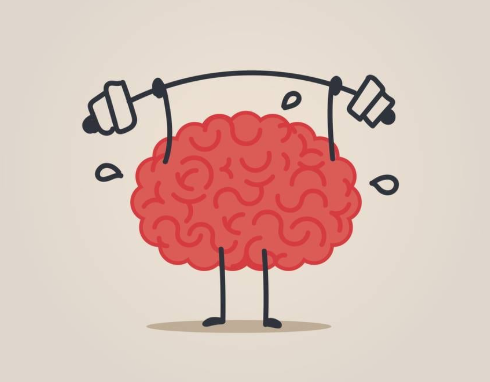
Most people start strength training for physical reasons - get stronger, lose fat, feel better in their body.
But what we see consistently at bStrong is this: people feel better before they look different. More clear. Less stressed. More steady day to day.
That's not accidental. And it's worth understanding why.
Can strength training support mental health?
Strength training supports mental health through stress regulation, improved confidence, better sleep, and the structure that consistent routine provides. The research on this is solid - regular resistance training is associated with reduced symptoms of anxiety and depression, improved cognitive function, and better emotional regulation. It doesn't replace therapy, counseling, or medical care. But it can meaningfully improve how you feel and function day to day, and it works well alongside professional support for people who are pursuing both.
What strength training does not replace
Before going further - this matters. Strength training is a meaningful support for mental health, but it is not a treatment for mental health conditions.
If you're experiencing persistent anxiety, depression, or other mental health challenges, professional support from a therapist, counselor, or physician is the right resource - not a gym membership. Exercise can be a valuable part of that picture, but it shouldn't be the whole plan.
With that said, the benefits below are real, well-supported, and meaningful for most adults who train consistently.
Mental health as a stress problem
For many adults, mental health challenges show up not as a diagnosed condition but as a background state of being overwhelmed - constant tension, racing thoughts, poor sleep, low energy, and a general sense that everything is on top of them.
Strength training helps because it gives that accumulated stress somewhere to go. A session has a clear start and finish, requires focused effort, and produces a physical result. The mental noise that comes with modern work and life has to take a back seat for 50 minutes.
That decompression effect is well-documented in the research - regular exercise improves the body's ability to regulate its stress response over time, not just in the immediate aftermath of a session. People who train consistently tend to be more resilient to stress, not just better at venting it.
We see this pattern all the time at bStrong. People come in feeling overwhelmed or burned out. Within a few weeks of consistent training, they report feeling more steady and clear - and that shift usually precedes any physical changes.
Confidence and a sense of capability
Mental health isn't only about mood or anxiety. It's also about how much you trust yourself to handle things.
Strength training reinforces that trust in a specific, tangible way. When you add weight to a lift you were struggling with six weeks ago, or finish a conditioning set you couldn't have finished when you started, the evidence is physical and undeniable. That sense of capability - "my body can do this," "I'm stronger than I thought," "I showed up again" - carries into other areas of life.
For adults who feel like they've stalled - stuck in routines, feeling powerless, going through the motions - starting a training program is often the first place they've seen themselves improve at something in a while. That matters more than it might sound.
Routine as a mental health tool
This is one of the most underrated mental health benefits of regular training, and one that almost never gets discussed.
For many adults, the week is a formless blur of demands with no clear rhythm or recovery. Anchoring 2-3 mornings or evenings to a structured, predictable activity - one that has a beginning, a middle, and an end, and that produces a consistent positive result - creates a kind of scaffolding for the rest of the week.
It's not rigidity. It's reliability. And that reliability has a stabilizing effect on mood, energy, and stress that accumulates over weeks and months. Members who have trained at bStrong consistently for 6 months often describe their sessions as a non-negotiable - not because they're forced to, but because they've experienced what the week feels like without it.
Cognitive health - the benefit most people don't expect
The mental health benefits of strength training extend beyond mood and stress. Research has consistently shown that regular resistance training improves cognitive function - specifically memory, processing speed, and executive function.
These improvements matter for daily performance: sharper focus at work, better decision-making, less mental fatigue. They also matter long-term: consistent physical activity is one of the most robustly supported factors in reducing the risk of cognitive decline and dementia as you age.
Most people think of strength training as a physical endeavor. The cognitive research suggests it belongs in the conversation about long-term brain health as clearly as it belongs in the conversation about muscle and bone.
Why strength training specifically - not just "staying active"
General movement helps. Walking, yoga, recreational activity - all genuinely valuable.
Strength training adds something different. It requires focused attention on controlled movement throughout the session. You can't go through a properly coached squat or deadlift while mentally elsewhere. The combination of physical challenge and required presence is what produces the stress-shifting effect. Pure cardio can allow your mind to wander. Strength training - especially coached - doesn't.
The session structure matters too. A coached strength session has a defined beginning, clear progression, and a specific end point. That structure is itself part of the mental health benefit for people whose days lack it.
Sleep - the connection most people notice first
Many members at bStrong report that sleep improves before anything else does. Falling asleep more easily, staying asleep, and waking up feeling more rested.
This matters because sleep underpins almost everything in mental health. Poor sleep amplifies stress, reduces emotional resilience, increases anxiety, and makes it harder to manage whatever is already difficult. Better sleep from consistent training creates a positive feedback loop - more resilient days lead to better-quality nights, which lead to more resilient days.
For more on optimizing sleep specifically, read our sleep guide.
What this looks like at bStrong
At bStrong in Bellevue and Redmond, workouts are structured, coached, and calm. The environment is focused rather than chaotic. You don't have to figure out what to do or how hard to push - the coach handles that. You just show up.
Most members train 2-3 times per week. The most common thing we hear after the first few weeks isn't about how they look. It's "I just feel better." More clear, less overwhelmed, more like themselves.
That's the goal - not just a stronger body, but a calmer, more capable person.
Frequently asked questions
Can strength training help with anxiety?
Research consistently shows that regular strength training reduces anxiety symptoms for many people - through improved stress regulation, better sleep, and the confidence that comes from physical progress. It's not a treatment for anxiety disorders, and it works best alongside other support rather than as a replacement for it. But for many adults, it's a meaningful part of managing day-to-day tension and mental noise.
Do workouts need to be intense to get the mental health benefits?
No. The mental health benefits of strength training come from consistency and structure, not intensity. Controlled, repeatable training at a challenging but manageable level produces the stress-regulation and mood effects. Extremely intense workouts can actually worsen mood and anxiety when they're overdone. Moderate, coached training 2-3 times per week is the right approach.
What if I feel mentally exhausted before a workout?
This is often when simpler, consistent training helps most. A session when you're depleted doesn't need to be your best performance - it just needs to happen. Most people who show up mentally exhausted report feeling noticeably better afterward, even when the session itself wasn't impressive. The physical effort creates a real shift in mental state that willpower alone doesn't produce.
Is it normal to feel emotional or mentally affected during or after training?
Yes, for some people - particularly early on or after a particularly hard session. Physical exertion affects hormones and emotional state in real ways. Some people find strength training unexpectedly cathartic. If what you're experiencing feels significant or distressing, talking with a mental health professional is the right move - they can help you understand what's happening and whether additional support would be useful.
How long before I notice mental health benefits from training?
Many people notice mood and energy improvements within the first 2-3 weeks of consistent training. Sleep improvements are often reported early too. The more stable, structural benefits - stress resilience, confidence, a sense of routine - build over 4-8 weeks of consistent training. These compound over months and tend to be self-reinforcing once established.
Is strength training recommended alongside therapy or medical treatment?
Yes - and many mental health professionals actively recommend it as part of a broader treatment plan. Exercise and professional mental health support work well together. Strength training doesn't replace therapy, medication, or medical care, but the evidence for it as a meaningful complement to those approaches is strong.
If stress, burnout, low energy, or just feeling off have been part of what's making it hard to stay consistent, strength training can meaningfully help - especially when it's structured, coached, and built into a repeatable routine.
Our 3-week trial is a low-pressure starting point. A consultation call, an Intro / Ramp Up session, 6 coached small group personal training workouts, an InBody scan, and practical nutrition resources - all for $99 at our Bellevue and Redmond locations.