
Building Strength at Any Age: Why It's Never Too Late to Start Lifting
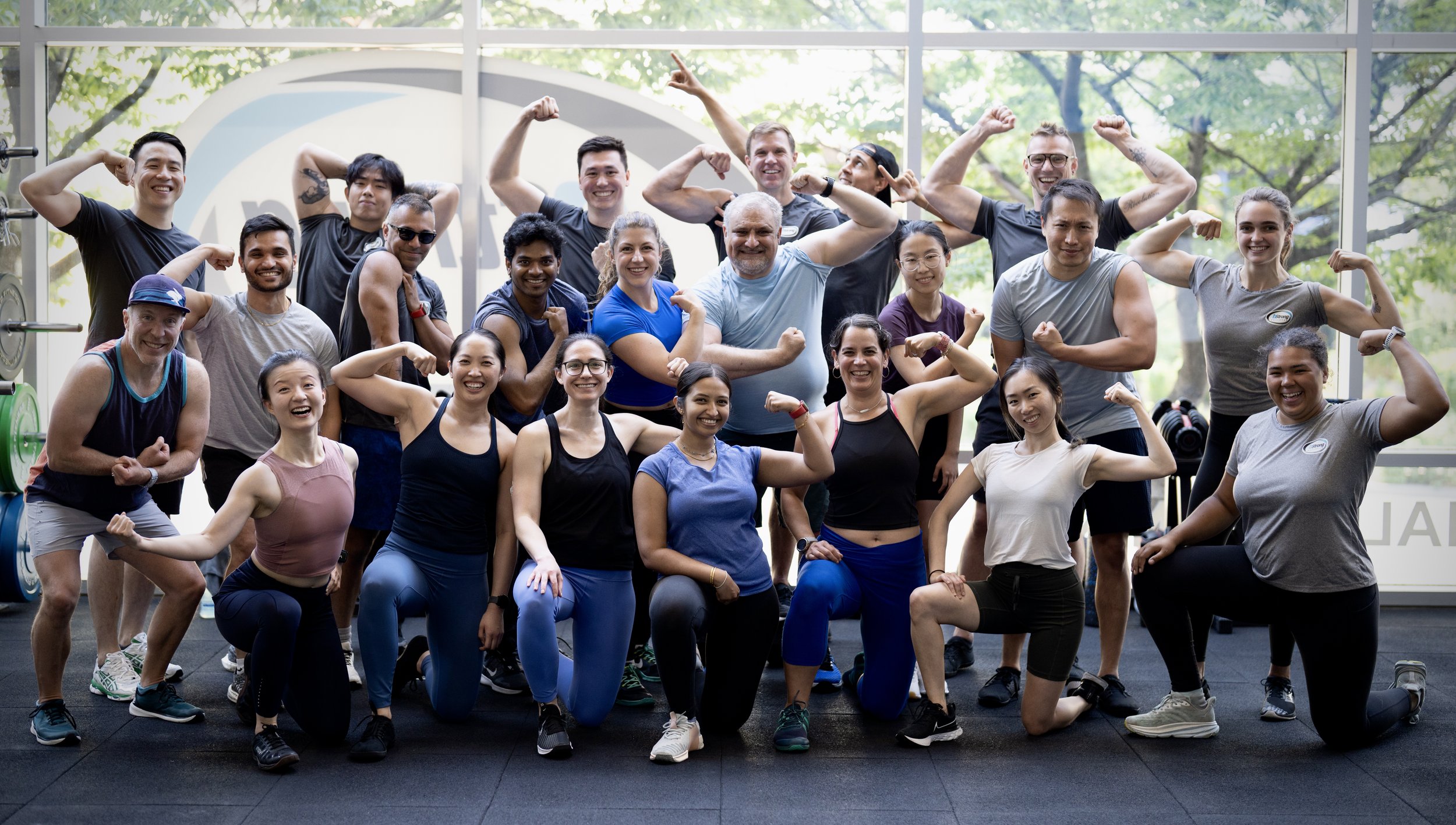
You've probably thought it.
"I'm too old to start lifting." Or "I should have started years ago - it's too late now."
Maybe there's some regret in there too. Watching your body change and wishing you'd done something sooner.
Here's what we know from working with people in their 50s, 60s, and beyond: it's not too late. The body responds to strength training at every age. Slower than at 25 - but it responds.
The only thing that's actually too late is waiting until you feel ready.
Is it ever too late to start strength training?
No. Adults of any age can build meaningful muscle and strength through resistance training. Studies show that previously sedentary older adults can increase muscle strength by 25-100% within a few months of starting a structured program. The benefits - stronger bones, better balance, preserved muscle mass, reduced joint pain, improved mental health - don't have an age cutoff. They're available to anyone who starts, regardless of when.
Why do people think it's too late?
Most of the reasons people give for waiting are understandable. Almost none of them are accurate.
"I'm too old." This is the most common one. And the least supported by evidence. Your body doesn't stop responding to resistance training at a certain age. The adaptations happen more gradually - but they happen.
"I'll get hurt." This one is worth taking seriously - and then putting in perspective. The injury risk from properly programmed strength training is low. The risk from not training - and losing the muscle, bone density, and balance that protect you - is high. The goal isn't to push through pain. It's to build strength progressively within what your body can handle.
"I should have started earlier - the window has passed." There is no closed window. People who start strength training in their 60s and 70s make real, measurable gains. The research is consistent on this. Starting later means adapting more slowly, not failing to adapt.
"I need to get in shape before I can start." This one comes up more than you'd expect. The idea that you need to be fit enough to start training is backwards. Training is how you get fit. You don't need to earn your way in.
"I don't know what I'm doing." This is legitimate - and solvable. Not knowing where to start is a reason to start with coaching, not a reason not to start.
Why does strength training matter more as you age?
Most people know that strength training builds muscle. What's less understood is how much that matters over time.
It slows muscle loss
After around 30, muscle mass declines gradually - a process called sarcopenia. Without resistance training, adults can lose 3-5% of muscle mass per decade. That loss accelerates after 60. Strength training slows this process significantly and in many cases reverses some of the loss that's already occurred.
It strengthens bones
Bone density decreases with age, increasing fracture risk. Resistance exercises place stress on bones that stimulates growth and density. This is especially important for women post-menopause, when bone loss accelerates. Squats, deadlifts, and other weight-bearing movements are among the most evidence-backed tools for improving bone density.
It improves balance and reduces fall risk
Falls are one of the most significant health risks for adults over 60. Strength training - particularly single-leg work and core stability - strengthens the muscles that support balance and improves the body's ability to react quickly. People who train consistently have meaningfully lower fall risk than those who don't.
It supports joint health
Building strength around joints - hips, knees, shoulders - provides better support and often reduces chronic pain. Many people with arthritis find that consistent strength training decreases their symptoms over time when programmed appropriately.
It improves mental health and quality of life
Research consistently links strength training to reduced depression and anxiety, improved self-esteem, and better quality of life. The mental health effects often show up within weeks - sometimes before the physical changes are noticeable.
For a deeper look at how this applies specifically to training in your 40s and beyond, read our guide to strength after 40.
What does safe strength training look like as you get older?
The principles are the same as for any beginner - but a few things matter more.
Start lighter than you think you need to. The first few weeks are about learning movement patterns, not testing limits. Form built on light loads transfers well to heavier weights later. Form built on heavy loads too soon leads to injury.
Focus on the fundamental movement patterns. Squat, hinge, push, pull, and core stability. These five patterns cover the whole body and carry over directly to everyday function. Standing from a chair is a squat. Picking something up off the floor is a hinge. Getting these right makes daily life easier.
Allow more recovery time. Older adults generally need more recovery between sessions than younger adults. Two to three sessions per week with rest days between is the right starting frequency for most people.
Work with a coach. This matters more at this stage than at any other. A coach watches your form, sets appropriate starting weights, and adjusts when something doesn't feel right. The difference between helpful and harmful loading isn't always obvious. Having someone experienced make that call is worth more than any specific program.
Bring your health history. Joint replacements, osteoporosis, heart conditions, recent surgeries - your coach needs to know. A good program works around those realities rather than ignoring them.
What do most people get wrong when starting later?
A few mistakes come up consistently.
Trying to catch up too fast. This is the most common and most harmful. Someone who feels behind tries to make up ground by going hard immediately. Tendons, ligaments, and connective tissue adapt more slowly than muscle - they need time to build capacity. Skipping that process is how injuries happen.
Thinking they need to be fit first. Waiting until you're "ready" to start training means waiting forever. The fitness comes from the training. There is no prerequisite.
Overtraining in the early weeks. More is not better at the start. Two sessions per week done consistently beats five sessions per week followed by a week off because you're too sore to move. The goal in the first month is to build the habit and let the body adapt - not to crush yourself.
Comparing themselves to younger members. Everyone in the gym is working with their own body, their own history, and their own starting point. Weights that feel heavy to you might look light compared to someone else. That comparison is irrelevant. Your progress is measured against your own last session, not anyone else's.
Stopping when it gets uncomfortable. Soreness in the first few weeks is normal. It's the body adapting. Most people who quit cite discomfort in the early weeks as the reason - without knowing that the discomfort typically resolves within 3-4 weeks as the body adjusts.
What does this look like at bStrong?
This is one of the most common profiles we see at our Bellevue and Redmond locations. Someone in their 50s or 60s - coming back after years away, or starting for the first time - who has been told by a doctor or physical therapist that they should be strength training.
Here's what they typically experience:
The consultation call covers their health history, any joint issues, and what they're trying to accomplish. That shapes how their sessions are programmed from day one.
Weights start conservatively and progress gradually. Your coach tracks what you lifted last session and gives you a target for this session based on that. No guessing.
If a movement bothers a joint, your coach modifies it in real time. You don't push through pain - you find a version that works for your body right now.
Sessions run with 2-6 people. Small enough that your coach can actually watch your form and give you specific feedback.
Most people in this situation say the same thing after a few weeks: they feel better than they expected, stronger than they thought they'd be, and wish they'd started sooner.
That last part - wishing they'd started sooner - is the one thing you can still control. Read our beginner strength training guide if you want to know what the first 12 weeks typically look like.
Frequently asked questions
Can I build muscle after 60?
Yes. Adults in their 60s, 70s, and even 80s can build measurable muscle strength through resistance training. The rate of muscle growth is slower than in younger adults and requires adequate protein intake alongside training - but the response is real. Starting at any age produces better outcomes than not starting.
Is strength training safe if I have osteoporosis?
Generally yes, with appropriate programming and medical clearance. Weight-bearing resistance exercises like squats and deadlifts are among the most evidence-backed interventions for improving bone density. Start with appropriate loads and work with a coach who knows your situation. Always discuss with your doctor before starting.
What if I have joint pain or arthritis?
Strength training can often reduce joint pain over time rather than aggravate it. The key is working within a comfortable range of motion, starting lighter, and having a coach who can modify exercises to avoid painful positions. Many people with arthritis find their symptoms improve with consistent training. If you're unsure what's safe, check with your doctor or physical therapist first.
How quickly will I see results if I start in my 50s or 60s?
Most people notice improved energy and reduced stiffness within the first 2-4 weeks. Measurable strength gains typically appear within 6-8 weeks. Visible changes in body composition take longer - usually 3-6 months. The timeline is longer than it was at 30, but the improvements are real.
How is this different from yoga or walking?
Walking and yoga are valuable. Strength training does something specifically different - it places load on muscles and bones that stimulates growth and density in a way that low-intensity movement doesn't. For bone density, muscle mass, balance, and joint stability, resistance training is the most evidence-backed tool available. The best approach includes all three.
If you've been putting this off because you thought it was too late - it wasn't then, and it isn't now.
Our 3-week trial at our Bellevue and Redmond locations is built for exactly this moment. A consultation call where we learn about your history and goals, an Intro Ramp-Up session to get comfortable before jumping into regular workouts, 6 coached small group personal training sessions, and an InBody scan - all for $99. No long-term commitment.