
Common Strength Training Myths (and the Truth Behind Them)
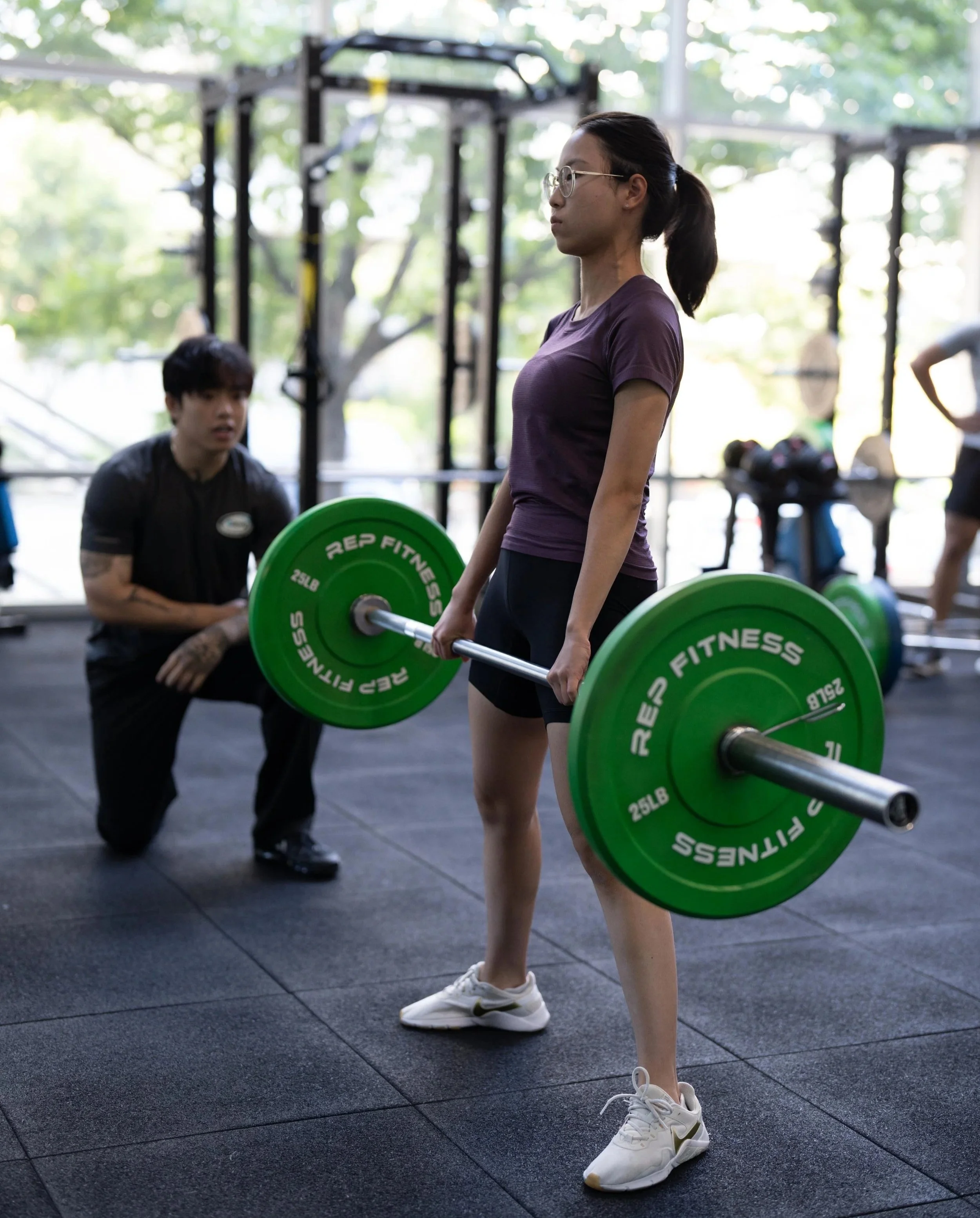
If you've ever thought about strength training but felt unsure, you're not alone.
Most people don't avoid it because they're lazy. They avoid it because of things they've heard:
"I'll get bulky." "It's dangerous." "I need to get in shape first." "It's for younger people."
Almost everyone we work with comes in believing at least one of these. The problem isn't strength training - it's the myths around it.
What's actually true about strength training for beginners?
Strength training is safe, effective, and appropriate for beginners of all ages when it's coached and properly scaled. Most concerns about bulking up, getting hurt, or not being ready come from outdated ideas or extreme examples - not how real people actually train. The vast majority of people who start strength training get stronger, move better, and feel more capable. They don't transform into bodybuilders. They just feel noticeably better over time.
Myth 1 - "Lifting weights will make me bulky"
This is the most common concern - and the most persistent myth, particularly among women.
The reality: building large amounts of muscle requires years of specific training, a consistent calorie surplus, and in many cases a specific focus on maximizing size. It doesn't happen accidentally. Most people who start strength training see improved muscle tone, better strength, and a leaner appearance - not dramatic size changes.
For women specifically, hormonal differences make significant muscle gain considerably harder than most people assume. The physiques people associate with "bulky" are the result of years of very deliberate effort, specific nutrition, and in many documented cases legal and not-so-legal supplements. That's not what happens in a coached 2-3 times per week program for a busy adult.
Myth 2 - "Strength training is dangerous for beginners"
Strength training has a reputation for being risky, but the reputation is mostly undeserved.
The reality: most injuries in strength training come from doing too much too quickly, using poor technique, or training without structure or guidance - not from the weights themselves. With proper coaching, appropriate starting weights, and gradual progression, strength training is one of the safer forms of exercise available. It actually reduces injury risk over time by building the muscles that support and protect joints.
You don't need to be strong to start. You start, and then you get strong. For more on safe lifting fundamentals, read our How to Lift Safely guide.
Myth 3 - "You have to lift heavy to get results"
A lot of people picture strength training as lifting as much weight as possible and feel immediately intimidated.
The reality: strength improves through consistent effort, controlled movement, and gradual progression over time - not from jumping to heavy weights immediately. You can build real strength by increasing load gradually, adjusting tempo (how slowly you move through the rep), changing rep ranges, and improving movement quality. Starting light with good form is more productive than starting heavy with poor form.
The goal early on isn't to impress anyone with the weight. It's to learn to move well and add challenge gradually from there.
Myth 4 - "I need to get in shape before I start"
This one keeps a lot of people stuck indefinitely.
The reality: strength training is how you get in shape - not something you do after you're already there. Waiting until you feel "ready" or "fit enough" is waiting for a condition that rarely arrives on its own. The first few sessions are specifically designed to build the foundation, not assume it already exists.
At bStrong, the Intro Ramp-Up session exists precisely for this reason. It's a lower-pressure introduction to movements and the gym environment before regular training begins. You don't need to meet any fitness threshold to start.
Myth 5 - "Strength training is only for younger people"
If anything, strength training becomes more important with age, not less.
After 40, adults naturally lose muscle mass without consistent resistance training. That loss contributes to lower energy, reduced bone density, higher injury risk, and declining ability to handle everyday physical demands. Strength training directly counters all of those. Whether you're in your 20s, 50s, or 70s, resistance training supports muscle mass, bone health, balance, and functional independence.
There's no age where it stops being useful. For more on training specifically in midlife, read our strength after 40 guide.
Myth 6 - "You need a lot of equipment to start"
Many people assume they need a full gym setup to do meaningful strength training.
The reality: bodyweight exercises like squats, lunges, pushups, and planks provide real training stimulus with no equipment at all. Simple tools like dumbbells, kettlebells, and resistance bands are more than enough to build a comprehensive strength routine. The equipment matters much less than the structure, progression, and consistency of the training.
At bStrong, all equipment is provided - you just show up. But the principle holds: access to the right tool matters far less than having a structured program and someone coaching your form.
Myth 7 - "Cardio is better than strength training for weight loss"
Cardio is valuable and worth doing. But it doesn't replace strength training for body composition.
The reality: cardio burns calories during the session. Strength training builds and preserves muscle, which affects how your body uses calories throughout the day - not just during exercise. When people lose weight primarily through cardio and calorie restriction without strength training, a meaningful portion of that weight often comes from muscle rather than fat - which affects how they look and makes maintaining results harder.
The best approach combines both, with strength training as the foundation and cardio as the supplement. For more on this, read our strength training vs cardio for fat loss post.
What actually drives results
Most of these myths come from extreme versions of training - competitive bodybuilding, powerlifting, or high-level athletics. That's not what most people are doing or need.
What actually drives results for most adults:
Consistency - showing up 2-3 times per week over months
A structured plan that progresses gradually
Good technique developed early and maintained
Adequate protein and sleep alongside the training
Not perfect workouts. Not extreme effort. Not doing everything at once.
What this looks like at bStrong
At bStrong in Bellevue and Redmond, we see these concerns every week. Most people start unsure, cautious, and worried about doing something wrong. That's exactly why the system is built the way it is.
Every workout is coached. Exercises are scaled to your current level. Progress is gradual and intentional. If something doesn't feel right, your coach adjusts it immediately.
Most people who came in believing multiple things on this list find that after a few sessions, the concerns mostly disappear. The experience of actually training - and seeing that it's manageable and feels good - is usually more convincing than any article. For more on what the first stretch looks like, read our return-to-fitness guide.
Frequently asked questions
Do I need any experience to start strength training?
No. Most people who join bStrong start as beginners or are returning after years away. The program is designed to meet you where you are. The Intro Ramp-Up session before your regular workouts start specifically exists to build familiarity with movements before any real training load is introduced.
Will strength training make me bulky?
For most people, no. Significant muscle gain requires years of specific, deliberate effort and a consistent calorie surplus - it doesn't happen accidentally from 2-3 sessions per week. Most people get stronger, leaner, and more confident without dramatic size changes. For women specifically, hormonal differences make large muscle gain considerably harder than most people assume.
Is strength training safe if I have aches, old injuries, or joint pain?
Often yes, when properly scaled and coached. Strong muscles surrounding a joint reduce stress on the joint itself - which is why appropriate strength training often reduces joint pain over time rather than making it worse. Tell your coach about any history at your consultation call - exercises are adjusted based on what your body can handle. If you have an acute injury or diagnosed condition, check with a physical therapist first.
How often should I train to see results?
Two to three full-body sessions per week is the right starting point for most adults. That's enough to build meaningful strength and make consistent progress while allowing adequate recovery. For more on fitting training into a busy schedule, read our strength training for busy people guide.
What if I'm over 50 and haven't trained in years?
You're not too late - and in many ways it's one of the more impactful times to start. After 40-50, muscle loss accelerates without consistent resistance training, and the benefits of starting are significant. The program is scaled to where you're starting, not where you think you should be. Read our strength after 40 guide for more on training at this stage.
Do I need to change my diet to see results from strength training?
Not dramatically, especially to start. The most important nutritional shift for most beginners is getting enough protein consistently - roughly 25-35 grams at each main meal. Beyond that, training regularly tends to naturally improve appetite regulation and food choices for many people. Read our protein guide for practical targets.
If you've been holding off because you weren't sure where to start - or because something on this list was in the back of your mind - that's normal. Most people aren't missing motivation. They're missing a safe, clear starting point.
Our 3-week trial is that starting point. A consultation call, an Intro / Ramp Up session, 6 coached small group personal training workouts, an InBody scan, and practical nutrition resources - all for $99 at our Bellevue and Redmond locations.