
Strength for Busy People - How to Build Muscle in 2-3 Sessions Per Week
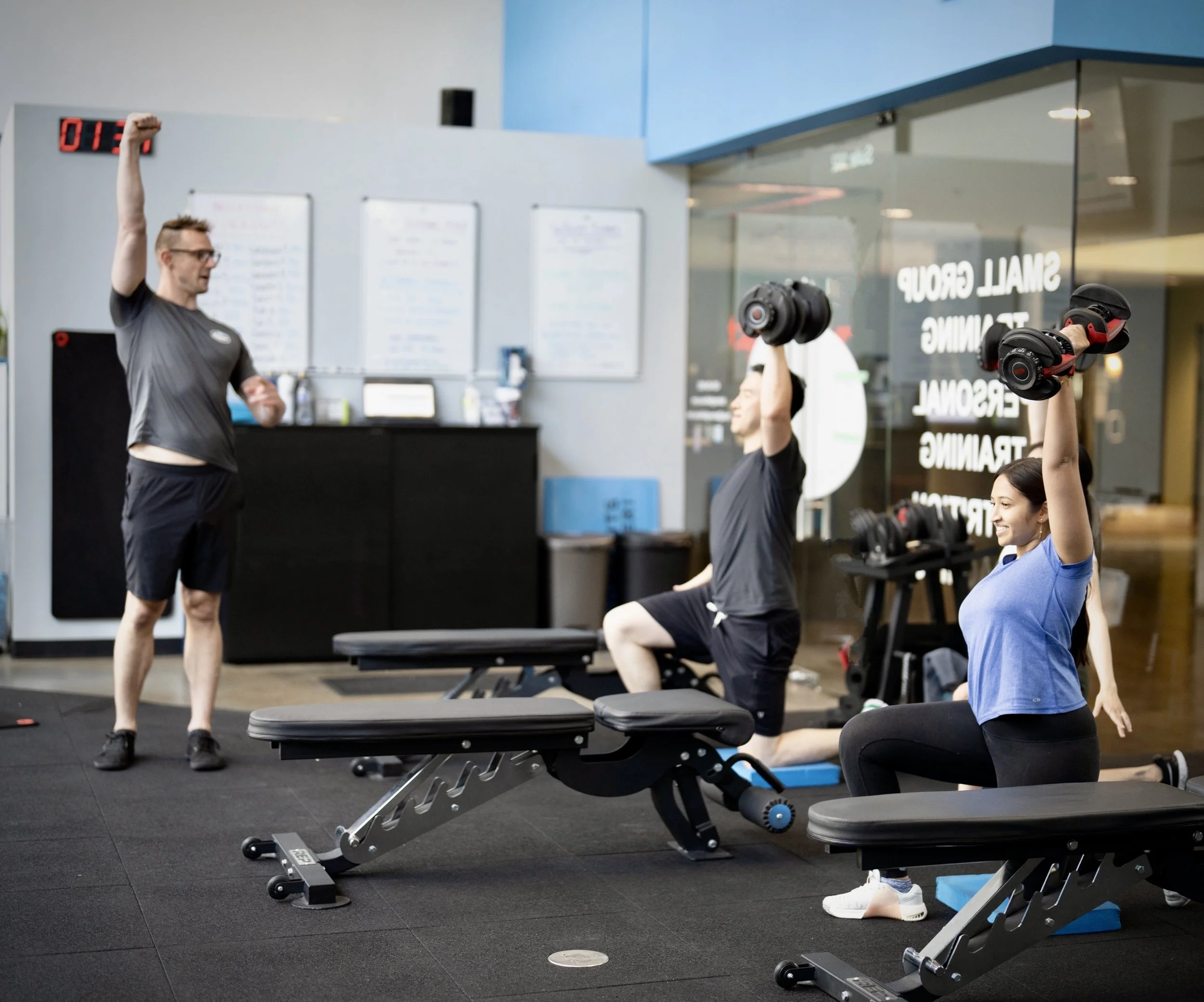
You want to get stronger. You just don't have unlimited time.
Work. Family. Commute. By the time your day is done, the idea of spending hours in the gym feels unrealistic.
Most people assume they probably need more time than they have. You don't.
For busy adults, 2-3 sessions per week isn't a compromise. It's usually the best approach.
If you're brand new to lifting, read our Beginner Strength Blueprint first. This post is for anyone who wants to train but needs a structure that fits real life.
Can you actually build muscle with only 2-3 sessions per week?
Short answer: Yes. Two to three structured full-body sessions per week is enough to build muscle, get stronger, and feel better - as long as you stay consistent and progress over time.
What matters most isn't how often you train. It's doing the right things, doing them consistently, and building over time.
Two days per week for a year beats five days per week for a month.
Why busy people struggle to stay consistent
It's not a motivation problem. It's a structure problem.
Most people try to fit in too many sessions, rely on energy and motivation to show up, and don't have a clear plan when they get there. After a long day, decision-making is the first thing to go. If you have to figure out your workout when you arrive, it's already harder than it needs to be.
A clear plan that requires zero thinking on your part is what makes consistency possible when you're tired.
For more on how to build that system, read our Consistency System guide.
What do most people get wrong about training with limited time?
We see the same patterns come up regularly.
They try to do too much. Long sessions, too many exercises, too many days. When the schedule breaks - a late meeting, a sick kid, a work trip - everything stops. A simpler structure survives disruptions. A complex one doesn't.
They use split routines. Chest Monday, legs Wednesday, back Friday only works if you hit every session every week. Miss one and a whole muscle group falls behind. Full-body training means every session covers everything - no gaps.
They train without tracking. No tracking means no progression. Random workouts produce random results. If your weights are slowly going up over weeks and months, you're progressing. If they're not, something needs to change.
They wait until life calms down. That rarely comes. Two sessions started now beat five sessions started someday.
Why 2-3 sessions per week actually works
Strength training creates a stimulus. Recovery is where the results happen.
Rest days are when your body adapts, strength develops, and muscle grows. They're not gaps in your program - they're part of it. Two to three well-structured full-body sessions per week hit every major movement pattern, allow adequate recovery, and fit into a real schedule.
Consistency over months beats intensity in any given week.
What does an efficient strength program look like for busy people?
Every session should be full-body. Every session should build around a main lift - squat, bench press, or deadlift variation. Around that anchor, each session includes upper-body pulling, lower-body accessory work, core stability, and a short conditioning finisher.
At bStrong, the main lift rotates every four weeks. So no session is permanently "squat day" - the anchor changes, the full-body structure stays the same. This keeps training balanced and fresh without requiring you to think about programming.
Here's what a typical week looks like:
Day 1 - Full Body
Main lift: squat variation (goblet squat, barbell squat, front squat)
Upper pull: rows or pulldowns
Lower accessory: lunges or step-ups
Core: carries or planks
Short finisher
Day 2 - Full Body
Main lift: bench variation (barbell, dumbbell press, incline)
Lower hinge: RDL or kettlebell deadlift
Upper pull accessory: band rows or cable work
Core and stability
Short finisher
Day 3 (optional) - Full Body
Main lift: deadlift variation (barbell, trap bar, kettlebell)
Squat or push accessory
Pull accessory
Core and mobility
Even on a two-session week, you're training your full body both days. No muscle groups missed.
For more on safe technique for these movements, read our How to Lift Safely guide.
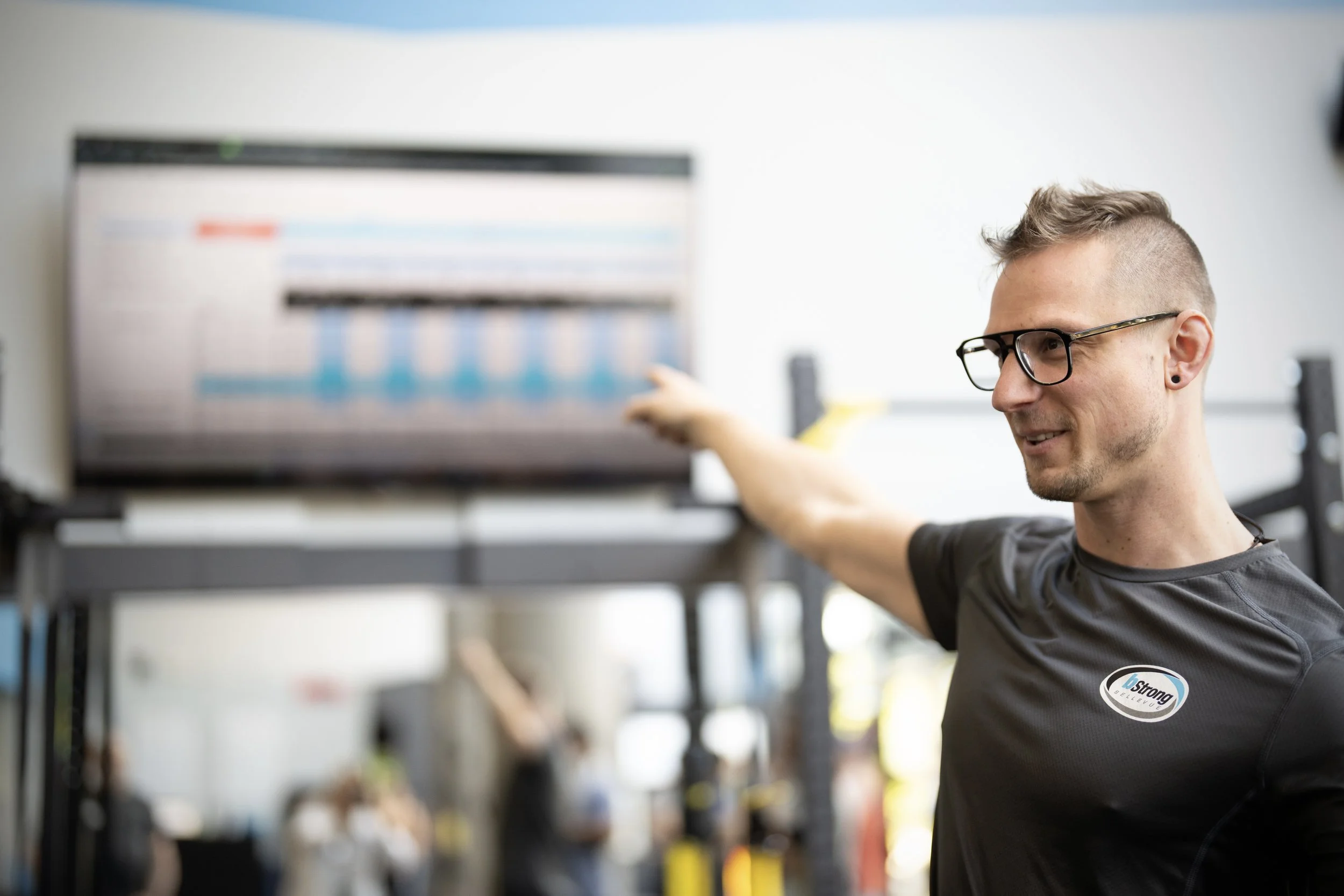
How to make progress with limited training time
Track your lifts. If your weights are slowly increasing week over week, you're progressing. That's the only metric that matters. If they're not moving, something - load, volume, technique - needs adjustment.
Put your main lift first. Your best energy goes into the movement that produces the most benefit. Don't save squats for after everything else.
Use controlled tempo. Slow, controlled reps produce more strength in less time than fast, sloppy ones. 2-3 seconds down on lower body movements. Smooth and controlled on everything else.
Accept the imperfect weeks. You'll miss sessions. That's normal. The goal is getting back on track, not being perfect. One missed week doesn't undo months of consistent work.
What does this look like at bStrong?
Most people we talk to aren't trying to optimize everything. They just want something that fits their life and actually works.
That's exactly who we're built for at our Bellevue and Redmond locations.
Here's how it works in practice:
Your workout is ready when you walk in - your name, exercises, and target weights based on what you lifted last week. No decisions required.
Sessions run 50 minutes. You're in and out.
Groups stay small - 2-6 people - so your coach can watch you move and give specific adjustments, not general cues to a room.
If you miss a week, you come back to where you left off. No starting over.
On a low-energy day, your coach reduces the load and keeps the session productive without depleting you.
We see this all the time: someone who thought they didn't have time realizes they just needed a plan that actually fits their schedule. Within 8-12 weeks they're noticeably stronger, they feel better, and they've naturally found a third session because they want it - not because anyone pressured them into it.
Two sessions per week is not a consolation prize. For most busy adults, it's where the best long-term results happen.

What to expect over the first 12 weeks
Weeks 1-4: Less confusion about what to do, movements feel smoother, the routine starts to feel like part of the week rather than an extra obligation.
Weeks 6-8: Noticeable strength gains, weights progressing consistently, more confidence in the gym and in daily movement.
Weeks 10-12: The habit feels automatic, training feels like something you do rather than something you're trying to do.
This is why the busy person approach works - it's sustainable and repeatable over months, not just effective for a few weeks.
If you're over 40, our Strength After 40 guide covers how recovery, joint health, and long-term progress work specifically for that stage.
Frequently asked questions
Is 2 days per week enough to build muscle?
Yes. For most busy adults, two well-structured full-body sessions per week produces real muscle and strength gains. Consistency over months matters more than session count in any given week.
How long should each session be?
Around 50 minutes. Long enough to cover all major movement patterns, short enough to fit a real schedule. A focused 50-minute session done consistently beats a 90-minute session done sporadically.
What if I miss a week?
Pick back up where you left off. Don't try to make up missed sessions or double up. One off week doesn't undo consistent progress. Getting back on track quickly is what matters.
Is this good for beginners?
Yes. Full-body training 2-3 times per week is one of the most effective structures for beginners specifically - enough frequency to build strength and learn movements, enough recovery time to avoid excessive soreness. Read our Beginner Strength Blueprint for the full first 12 weeks.
Do I need to do anything on rest days?
You don't need to. Light movement - an easy walk, some mobility work - can help with recovery and reduce stiffness. But rest days are part of the program. Your body builds strength between sessions, not just during them.
How is this different from group fitness classes?
Group fitness classes typically change workouts daily with no systematic progression. What we're describing tracks your weights, progresses your main lifts week over week, and builds each session on the last. The goal isn't just to feel worked - it's to get measurably stronger over time.
If you've been putting this off because you don't have time - you're exactly who this is for.
You don't need more time. You need a simple plan, clear structure, and coaching that handles everything so you just show up.
Our 3-week trial is $99 and includes a consultation call, an Intro Ramp-Up session, 6 coached small group personal training workouts, and an InBody scan. Built for busy people at our Bellevue and Redmond locations. No long-term commitment.