
Is Strength Training Safe for Your Knees? Here’s the Truth
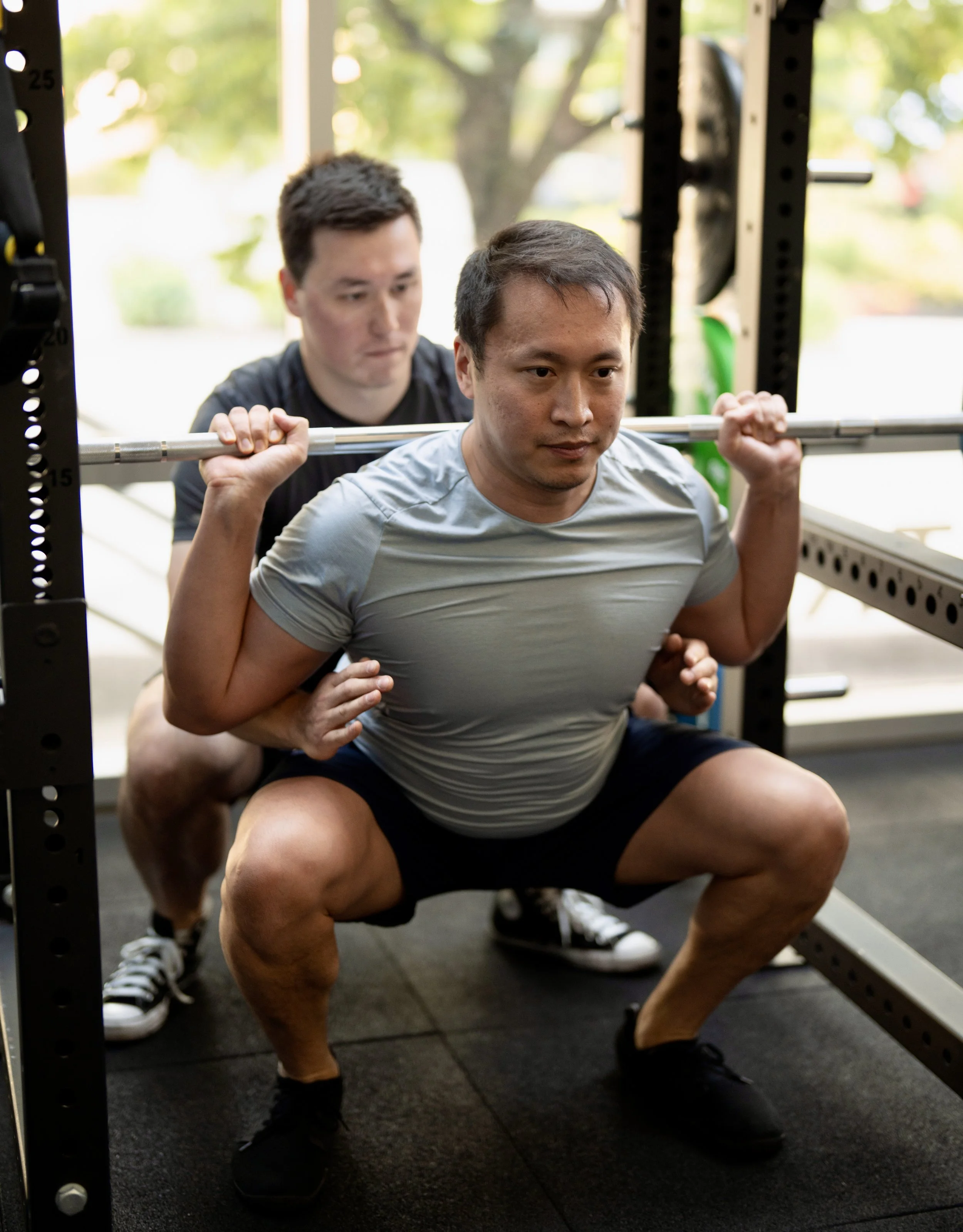
If your knees have ever hurt during squats, stairs, or getting up off the floor, it’s normal to wonder if lifting is going to make things worse.
A lot of people hear things like:
“Squats are bad for your knees”
“Lifting wears your joints out”
“If it hurts, just stop”
Most of that advice is either wrong or incomplete.
For most people, strength training is one of the best things you can do for your knees.
The key is how you train, not whether you train.
Is strength training safe for people with knee pain?
Yes. For most people, strength training is safe for your knees. In many cases, it actually helps reduce knee pain by building strength around the joint. The key is starting with the right load, range of motion, and progression.
What we see over and over: When people build strength in their quads, glutes, and hamstrings, their knees tend to feel better, not worse.
Those muscles act like support systems for the joint. When they’re weak, the knee ends up taking more stress than it should.
The goal isn’t to avoid using your knees. It’s to use them the right way and build them up over time.
Why do knees hurt during strength training?
Most knee pain during lifting isn’t because lifting is “bad.” It usually comes down to a few predictable issues:
1. Too much too soon - Jumping back into heavy weights before your body is ready.
2. Too much range too soon - Trying to squat deep when your knee isn’t ready for it yet.
3. Lack of control - Dropping fast into movements, bouncing, or letting the knee cave in.
4. The wrong exercise (for right now) - Barbell squats might be great later. They’re not always the best place to start.
Most of the time, the knee isn’t the real problem. The approach is.
What does knee-safe strength training actually look like?
This is what we see work best for most people.
Start with a range you can control
You don’t need full depth on day one.
Good starting options:
Box squats
Goblet squats
Split squats with shorter range
Step-ups
You build from there.
Use slower, controlled reps
Rushing reps is one of the fastest ways to irritate your knees.
A simple rule:
2–3 seconds down
Controlled up
This keeps tension in the muscles and reduces stress on the joint.
Strengthen the muscles around the knee
Most people with knee pain don’t need less leg training. They need better leg training.
Key areas:
Quads → control and absorb force
Glutes → stabilize and support
Hamstrings → support from behind
Calves → help position everything correctly
As these get stronger, knees usually feel more stable.
Progress slowly and consistently
Knees don’t respond well to:
all-or-nothing training
random intensity
long gaps between workouts
What works better:
2–3 workouts per week
small, steady progress
Your knees don’t need to be babied. They need consistent, smart training.
What people get wrong about lifting and knee pain
We see the same patterns all the time.
They stop training completely
This removes stress… but also removes the thing that builds strength.
They push through sharp pain
There’s a difference between effort and pain. Sharp, joint-specific pain is a signal to adjust.
They treat all knee pain the same
Different issues need different approaches. Blanket advice doesn’t work.
They wait until everything feels perfect
For a lot of people, that means never starting again.
The goal isn’t zero discomfort. It’s finding what works and building from there.
When should you see a professional?
Strength training helps most knee issues, but there are times to get it checked.
Pay attention if you have:
sharp pain that doesn’t improve when you adjust
swelling that increases after workouts
locking, catching, or instability
pain getting worse week to week
a recent injury (fall, twist, impact)
In those cases, a physical therapist is usually a good place to start.
What this looks like at bStrong
This is one of the most common situations we see in Bellevue and Redmond.
Someone:
hasn’t trained legs in a while
is unsure what’s safe
doesn’t want to make things worse
Here’s how we handle it:
We learn your history before you start
We find a starting range and weight that’s workable
We adjust movements in real time (box squats, step-ups, etc.)
We coach tempo so reps stay controlled
We track your progress so you’re not guessing each workout
Your plan is already there when you walk in. Your coach helps you adjust from there.
Most people notice within a few weeks:
less irritation during workouts
more confidence in movements
daily things (stairs, getting up, walking hills) feel easier
For more on how strength training supports injury prevention, read our injury prevention guide.

What can you expect in the first 4–8 weeks?
Weeks 1–4:
less uncertainty around what’s safe
better control in movements
fewer flare-ups between workouts
Weeks 4–8:
stronger legs
better tolerance for daily movement
more confidence adding weight or depth
Progress isn't perfectly linear. Some weeks will feel better than others. The trend over 4-8 weeks is what matters.
For more on supporting this process between sessions, read our recovery guide.
Frequently asked questions
Are squats bad for your knees?
For most people, no. With the right range, control, and progression, squats are well tolerated. The variation matters more than the movement itself.
What if squats hurt my knees?
Reduce depth first. Try a box squat. Slow the tempo. If that doesn’t help, switch to a different variation like step-ups or split squats.
Can I strength train with arthritis?
In most cases, yes. Strength training is one of the best ways to support joint health. You just need to start at the right level and build gradually.
Is leg press safer than squats?
Not automatically. Both can work well. It depends on how they’re used and what fits your current ability.
How do I know if pain is normal?
Muscle fatigue is normal. Sharp, joint-specific pain that lingers or worsens is not.
If you've been avoiding leg training because you're not sure what's safe, you're exactly who this is for.
Most people don't need to stop training. They need a better way to train.
Our 3-week trial starts with a consultation call where your coach learns about your history and any limitations before your first session. From there, everything is adjusted to what your body can handle and built from there. 6 coached small group personal training workouts, an Intro Ramp-Up session, and an InBody scan - all for $99 at our Bellevue and Redmond locations.