
Does Lifting Help or Hurt Lower Back Pain?
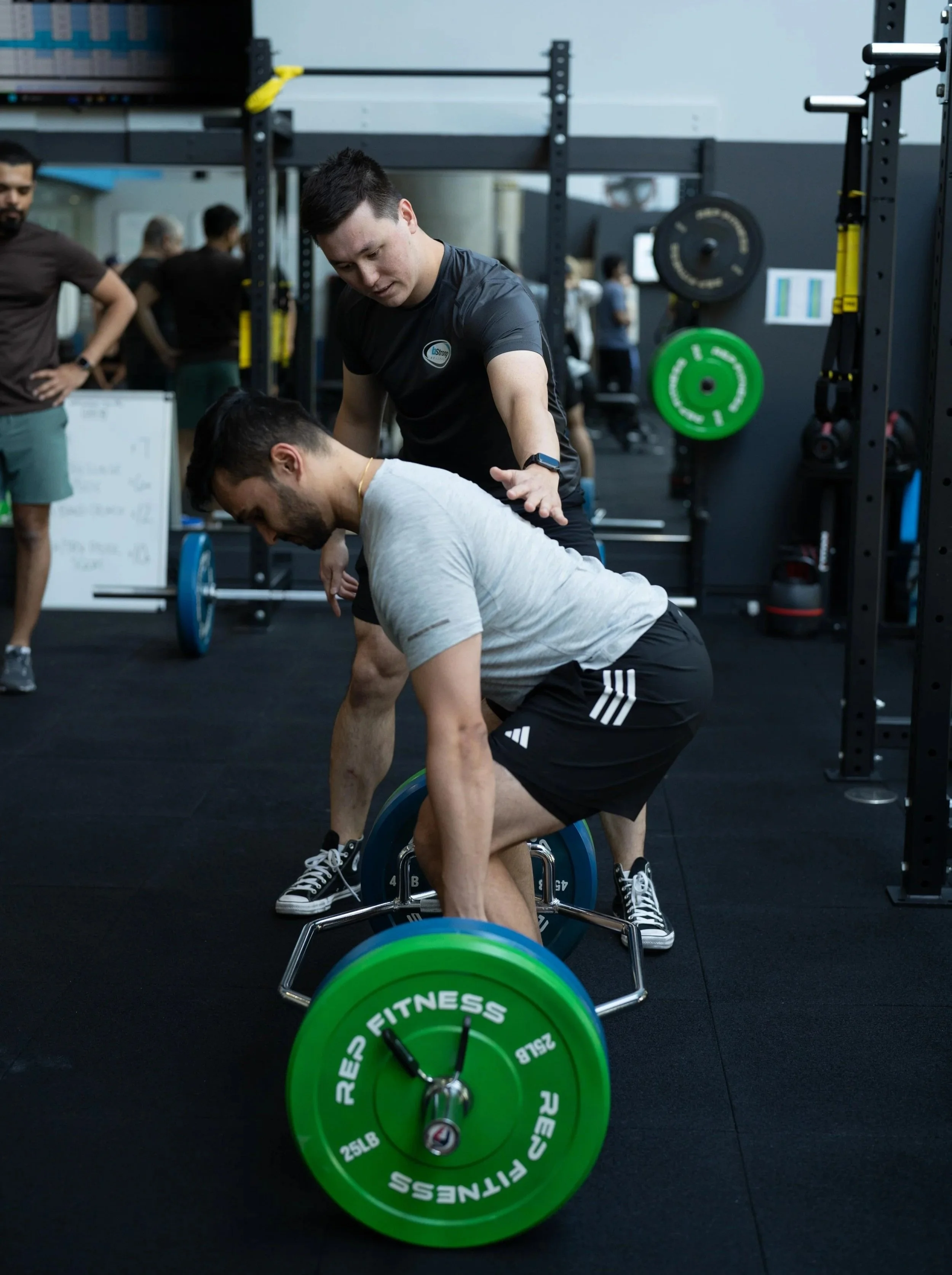
If you've dealt with lower back pain, lifting weights can feel like exactly the thing you're supposed to avoid. Maybe your back has bothered you after deadlifts before, you've been told to "protect your back," or you're simply nervous that adding weight will make an already sensitive area worse.
The answer isn't that everyone with back pain should lift heavy. But avoiding strength training forever usually isn't the answer either. Here's what the research supports, how to adjust exercises that bother you, and when back pain should be evaluated before you keep training.
Does lifting help or hurt lower back pain?
For many people with ongoing, nonspecific lower back pain, appropriately scaled exercise can be helpful rather than harmful, and strength training can be part of that approach. The important part is matching the exercise, weight, range of motion, and progression to the person. Back pain has many possible causes, though, so new, severe, or concerning symptoms should be evaluated rather than simply trained through.
Major clinical guidelines recommend exercise as one option for chronic low back pain. That can include strengthening, aerobic exercise, movement-control work, and other forms of activity. There isn't one exercise or training style that works best for everyone.
That's a much more useful way to think about it than "lifting is good for your back" or "lifting is bad for your back."
It depends on what you're dealing with and how you train.
Should you stop exercising when your back hurts?
Not necessarily. For many types of low back pain, complete rest isn't recommended, and staying reasonably active is often encouraged.
That doesn't mean ignoring pain.
There's a big difference between:
Staying active
Modifying an uncomfortable exercise
Gradually rebuilding what you can do
and:
Forcing a movement that clearly makes symptoms worse
Trying to push through significant pain
Assuming every painful back problem simply needs more strengthening
Sometimes the right adjustment is doing less. Sometimes it's using a different movement.
And sometimes the right move is getting evaluated by a physician or physical therapist before continuing.
Can strength training actually help chronic lower back pain?
It can be one useful part of managing chronic lower back pain.
The American College of Physicians recommends exercise as one of the initial non-drug treatment options for chronic low back pain. The World Health Organization also recommends structured exercise as part of care for chronic primary low back pain.
A 2026 systematic review in the European Spine Journal looked specifically at strength exercise for low back pain. The included studies involved people with chronic nonspecific low back pain. Strength training was associated with improvements in pain and disability compared with minimal intervention, although the researchers rated the overall certainty of the evidence as low to very low.
So the takeaway isn't:
Lift weights and your back pain will disappear.
It's:
A gradually progressed strength program can be a reasonable part of staying active and building capacity when you're dealing with chronic nonspecific low back pain.
That's an important distinction.
What if your back pain just started?
A new episode of back pain is different from ongoing chronic back pain.
The evidence supporting structured exercise programs is stronger for chronic low back pain, usually defined as lasting more than about three months. The 2026 strength-training review, for example, did not include anyone whose symptoms had lasted less than three months.
That doesn't mean you need to lie down and stop moving when your back starts hurting. Most acute and subacute episodes improve over time, and staying reasonably active is generally preferred to prolonged bed rest.
But a new episode of significant back pain, especially after an injury or with other concerning symptoms, isn't the time to start a new lifting program and assume strengthening will fix it.
Do you need to strengthen your core?
Core training can be useful, but lower back pain isn't automatically a "weak core" problem.
Exercises that train the trunk can absolutely be part of a good program. But exercise recommendations for chronic low back pain are broader than simply doing planks or abdominal exercises.
A balanced program might include:
Squat variations
Hip-hinge variations
Rows
Presses
Marches
Trunk stability exercises
Lower-body strength work
Walking or other aerobic activity
The exact combination depends on what you can tolerate, your current ability, and what you're trying to get back to doing.
You don't need one magical "back exercise."
Do you have to avoid squats and deadlifts?
No. A history of lower back pain doesn't automatically mean squats or deadlifts are off limits.
It also doesn't mean you have to do them.
There are plenty of ways to train the same general movement patterns.
Instead of pulling a heavy barbell from the floor, for example, you might start with:
A kettlebell deadlift
A trap-bar deadlift
A deadlift from a raised starting position
A Romanian deadlift with a shorter range of motion
A lighter hip-hinge variation
For a squat, you might adjust:
The weight
The depth
The stance
The equipment
The exercise variation
The goal isn't to prove you can perform a particular exercise.
The goal is to find movements you can perform comfortably, then gradually build from there.
If deadlift technique itself is giving you trouble, read Your Back Rounds When You Deadlift? Try These Two Fixes.
What should you do if an exercise bothers your back?
Adjust the exercise before deciding that your only choices are pushing through it or stopping training completely.
Depending on the situation, that might mean:
Reducing the weight
Shortening the range of motion
Changing your stance or setup
Using a different variation
Taking more rest
Doing fewer reps
Swapping the exercise altogether
Then pay attention to what happens.
A movement that becomes comfortable after reducing the weight or changing the setup is a different situation from pain that keeps getting worse or starts traveling down your leg.
You don't earn extra credit for sticking with one particular exercise when another option works better.
Is some back soreness after lifting normal?
Some muscular soreness around your back can be normal after strength training, especially when an exercise is new.
Deadlifts, Romanian deadlifts, rows, squats, and other exercises ask muscles around your trunk and hips to work hard. Those muscles can feel tired or sore afterward just like your legs, chest, or shoulders.
What matters is the pattern.
Normal training soreness generally feels muscular and improves with time.
Pay more attention when symptoms are:
Sharp or severe
Getting progressively worse
Shooting or traveling down a leg
Associated with new numbness or tingling
Accompanied by noticeable weakness
Persisting or repeatedly returning without improvement
A coach can help adjust a workout. Determining why your back hurts belongs with an appropriate healthcare professional.
When should back pain be evaluated before you keep training?
Some symptoms need medical evaluation rather than a workout modification. A few require emergency care.
Seek emergency medical care right away if back pain comes with:
New loss of bladder or bowel control, or difficulty urinating
New numbness around the groin, buttocks, or inner thighs
Significant new or rapidly worsening leg weakness
These can occur with cauda equina syndrome, a rare but serious compression of nerves at the base of the spine. It requires immediate medical evaluation because delays can increase the risk of permanent neurological problems.
You should also contact a healthcare professional if you have:
Back pain with fever or signs of significant infection
Back pain after significant trauma
New or worsening numbness, tingling, or weakness
Pain that's severe, steadily worsening, or not improving as expected
A medical history that makes new back pain more concerning
Most back pain does not fall into these categories. The point isn't to make ordinary soreness scary. It's to recognize the situations where a workout modification isn't the appropriate next step.
For ongoing pain that's affecting how you move or train, a physical therapist can be especially helpful. They can assess the problem and provide clinical guidance, while a coach can help you train within those recommendations.
What this looks like at bStrong
At bStrong in Bellevue and Redmond, having a history of back discomfort doesn't automatically exclude someone from strength training.
It does affect how we approach the starting point.
If a member tells us a deadlift bothers their back, for example, our first response isn't to insist that they keep pulling from the floor. We might reduce the weight, shorten the range of motion, raise the starting position, change the equipment, or use another hinge variation.
The same idea applies throughout the workout.
Your workout and target weights are on the TV, but those targets aren't rules. If you're moving differently that day or something doesn't feel right, we adjust.
Over time, the goal is to gradually build what you can comfortably do instead of repeatedly testing the movement that bothers you.
That's also why we track working weights and reps. If someone starts with a lighter or shorter-range version of an exercise, we can see what they're actually doing and gradually progress from there rather than guessing.
We're also clear about our role. Coaches can modify exercises and help you train appropriately, but we don't diagnose or treat back pain. If something needs clinical assessment, we'll tell you.
For a broader look at our approach, read How to Lift Safely.
How should you start lifting if you have a history of lower back pain?
If your back has bothered you before and you're ready to return to strength training, start conservatively and build from there.
A reasonable approach is:
Begin with movements you can perform comfortably.
Use manageable weights instead of testing your limits.
Keep a few good reps in reserve rather than training to failure.
Adjust the range of motion when needed.
Progress gradually rather than changing everything at once.
Pay attention to the overall pattern during and after training.
Get professional guidance if symptoms are worsening or unclear.
You don't need to make every exercise "back specific."
A balanced full-body program that you can gradually progress is often more useful than trying to find one magical corrective exercise.
And don't judge the whole process by one workout. What matters more is the pattern over time: what you can do comfortably, whether your capacity is improving, and whether you're able to return to more of the activities you care about.
Want help getting stronger without guessing what your back can handle?
If you want to strength train but you're nervous about aggravating an old back issue, our 3-week trial gives you a coached place to start.
You'll get:
An intro consultation
An optional Intro / Ramp-Up workout
6 coached Small Group Personal Training workouts
An InBody scan
Practical nutrition resources
Coaching and adjustments throughout the trial
We'll learn about your training history and current limitations, help you find appropriate starting points, and adjust exercises when needed.
If something falls outside our scope as coaches, we'll tell you that too.
Sources
American College of Physicians. Noninvasive Treatments for Acute, Subacute, and Chronic Low Back Pain: A Clinical Practice Guideline.
https://pubmed.ncbi.nlm.nih.gov/28192789/
Mader de Oliveira G, et al. (2026). The efficacy of strength exercise dosage on pain and disability in people with low back pain: a systematic review of randomized controlled trials. European Spine Journal.
https://link.springer.com/article/10.1007/s00586-026-09901-5
World Health Organization. Guideline for non-surgical management of chronic primary low back pain in adults.
WHO guideline
Cleveland Clinic. Cauda Equina Syndrome.
https://my.clevelandclinic.org/health/diseases/22132-cauda-equina-syndrome