
What Strength Training Really Is (and Why It Matters)
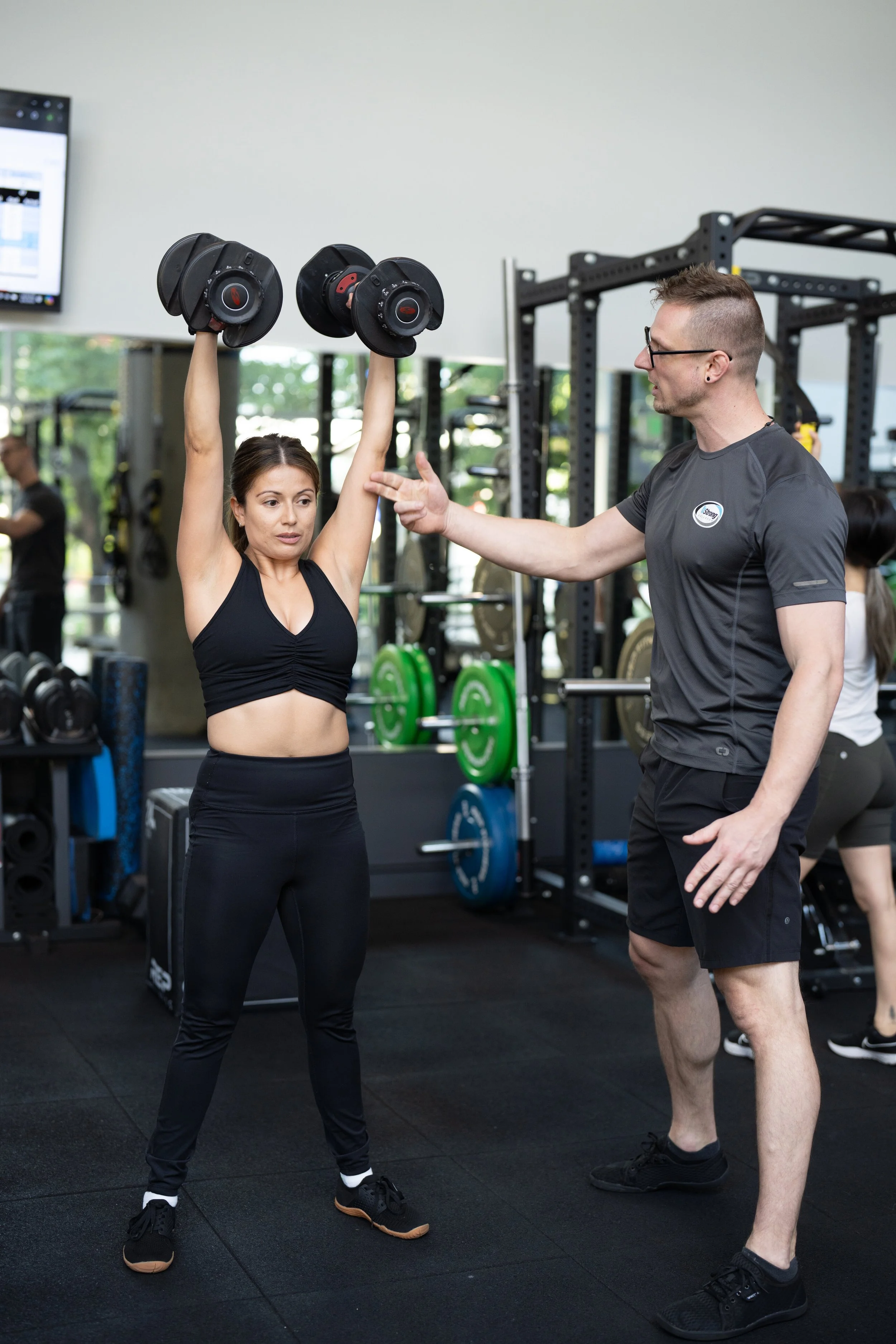
When people hear "strength training," they usually picture heavy weights, intense gyms, or workouts built for athletes.
That image turns a lot of people off before they ever start.
But for most adults, strength training is much simpler than that. It's one of the most effective things you can do for your body - not just for how you look, but for how you feel, how you move, and how capable you stay as you get older.
What is strength training?
Strength training is any form of exercise where you use resistance to challenge your muscles so they become stronger over time. That resistance can come from dumbbells, kettlebells, barbells, resistance bands, machines, or your own bodyweight. The specific tool doesn't matter as much as the principle: your muscles work against resistance, break down slightly during the effort, and come back stronger as they repair. Done consistently, that process builds strength, supports joint health, and improves how your body functions day to day.
Why strength training matters
Strength isn't just about muscles. It affects how your entire body works - and the case for it gets stronger, not weaker, as you get older.
Muscle and metabolism. Muscle mass helps maintain a healthy metabolism. The more muscle your body has, the more calories it burns throughout the day even at rest. This matters especially when people are trying to lose fat. A common pattern: lose 20 pounds through cardio and calorie restriction, but a meaningful portion of that comes from muscle rather than fat. Now with less muscle, the metabolism drops, and the next attempt at fat loss becomes even harder. Strength training is how you break that cycle - it maintains or builds muscle while fat comes off, producing better body composition rather than just a lower number on the scale.
Long-term function. As we get older, we naturally lose muscle if we don't train. That loss contributes to lower energy, higher injury risk, and difficulty with everyday physical tasks. Strength training counters that directly - it supports muscle and bone density, improves balance and stability, and keeps daily movement easier for longer.
Additional benefits:
Improved bone density
Improved insulin sensitivity - reducing type 2 diabetes risk
Lower injury risk from stronger supporting muscles
Better balance and agility
Decreased blood pressure and improved cholesterol
Improved body composition
Better self-esteem and confidence in movement
Strength training vs cardio - which matters more?
Cardio has real benefits - heart health, endurance, mood, and overall fitness. There's no reason to stop doing it if you enjoy it.
But when it comes to body composition - changing how your body looks and functions - strength training should be the main course and cardio the side dish.
Here's why: most people say their goal is "weight loss" when what they actually mean is "fat loss." Those aren't the same thing. Weight can come from fat, muscle, or water. You could maintain the exact same weight over three months while losing 5 pounds of fat and gaining 5 pounds of muscle - and you'd look and feel significantly better even though the scale didn't move. Cardio doesn't address that equation. Strength training does.
If you're currently doing mostly cardio and wondering why the results aren't matching the effort, adding strength training is usually the missing piece. For more on this, read our strength training vs cardio for fat loss post.
What strength training actually looks like
Strength training doesn't need to be extreme or complicated.
For most adults, a practical structure looks like:
2-3 sessions per week
Full-body workouts each session
Movements that cover the major patterns: squat, hinge (like a deadlift), push, pull, and carry or core work
Controlled tempo and good technique before adding heavier weight
Gradual progression over weeks and months
Compound movements - exercises that work multiple muscle groups at once - give you the most return for your time. A squat works the legs, hips, and core simultaneously. A row works the back, biceps, and core. These movements also carry over directly to daily life: lifting, carrying, climbing stairs, getting up from the floor.
You don't need to guess what to do. You need a plan that progresses over time and a coach or structure that keeps you on track. For a full beginner program, read our beginner strength blueprint.

Is strength training safe?
Yes - when done properly, it's one of the safest forms of exercise. Problems usually come from doing too much too quickly, using poor technique, or training without guidance.
With appropriate coaching and gradual progression, strength training:
Reduces injury risk by building the muscles that protect joints
Improves balance and stability
Builds confidence in how your body moves
You don't need to be strong to start. You get strong by starting. For more on safe lifting technique specifically, read our How to Lift Safely guide.
What this looks like at bStrong
At bStrong in Bellevue and Redmond, strength training is structured, coached, and built to be approachable for people who haven't trained in a while - or who've never trained at all.
Every session is guided by a coach. Exercises are scaled to your current level and adjusted in real time based on how you're moving. Progress is planned, not guessed - your weights are tracked session to session so you always have a clear target when an exercise comes back.
Most members train 2-3 times per week. New members start with a consultation call and an Intro Ramp-Up session before jumping into regular workouts - a low-pressure introduction to movements and the gym environment before the full training schedule begins.
This isn't about proving anything. It's about feeling better, moving more easily, and building something that lasts. For more on what that first stretch looks like, read our return-to-fitness guide.
Frequently asked questions
Do I need experience to start strength training?
No. Most people who join bStrong start as beginners or are returning after time away. The program is designed to meet you where you are, not where you think you should be. The Intro Ramp-Up session specifically exists to build confidence and familiarity before you start regular workouts.
Will strength training make me bulky?
For most people, no. Building significant muscle mass requires very specific, sustained effort - high volume, substantial calorie surplus, and typically years of dedicated training. For most adults training 2-3 times per week with a balanced diet, the result is a stronger, leaner, more capable body - not dramatic size changes. This concern comes up most often for women, for whom hormonal factors make large muscle gain considerably harder than most people assume.
Is strength training safe for older adults?
Yes - and it becomes more important with age, not less. After 40, muscle loss accelerates without consistent resistance training. Strength training is one of the most effective ways to maintain muscle mass, bone density, balance, and everyday physical function as you get older. For more on this specifically, read our strength after 40 guide.
How often should I strength train?
Two to three full-body sessions per week is the right starting point for most busy adults. That's enough to build meaningful strength and make consistent progress while allowing adequate recovery between sessions. For more on fitting training into a busy schedule, read our strength training for busy people guide.
How is strength training different from cardio?
Cardio primarily improves cardiovascular fitness and burns calories during the session. Strength training builds and preserves muscle, improves body composition over time, and supports joint health and bone density in ways cardio doesn't. Most adults benefit from both - with strength training as the foundation and cardio as the supplement. For a full breakdown, read our why cardio isn't enough post.
How long before I see results from strength training?
Most people notice improved energy and less stiffness within 2-3 weeks of consistent training. Measurable strength gains typically appear within 4-6 weeks. Visible body composition changes take 8-12 weeks of consistent training and adequate nutrition. The functional improvements - daily movement feeling easier, more confidence in your body - often show up faster than people expect.
If you've been unsure where to start, that's normal. Most people don't need more information. They need a place that makes it simple.
Our 3-week trial is that place. A consultation call, an Intro / Ramp Up session, 6 coached small group personal training workouts, an InBody scan, and practical nutrition resources - all for $99 at our Bellevue and Redmond locations.