
Joining a Gym in Bellevue or Redmond? Read This First
Most people don't fail because they're lazy. They fail because the plan is vague.
You join a gym, go hard for two or three weeks, then life hits. Meetings, kids, travel, a sore back. Because there's no real structure, you fade out - again.
This post is for busy adults in Bellevue and Redmond trying to decide between a gym membership and coached training, and who want something that actually sticks.
What actually determines whether a gym works for you?
The best gym isn't the cheapest, the closest, or the most intense. It's the one that gives you enough structure, support, and accountability to show up consistently, know what to do when you get there, and feel comfortable while you're doing it. Most gym memberships fail not because the gym is bad - but because the setup doesn't match what the person actually needs to stay consistent.
The honest loop most people get stuck in
Here's the pattern that comes up constantly:
Join a gym because it feels like the responsible move
Do random workouts found online or whatever machines are open
Feel sore, unsure whether you're doing it right, and struggle to see progress
Miss a week, then two
Keep paying and feeling guilty about it
A gym membership can absolutely work. It just doesn't work for everyone. And when it doesn't work, it usually isn't a motivation or discipline problem. It's a setup problem.
When a gym membership is actually a good fit
A gym membership works well if you:
Already know what to do when you walk in
Can self-motivate consistently even when tired or stressed
Can train without anyone checking in
Know how to progress your workouts over time, not just sweat
If you've succeeded with gym memberships before, stick with what works.
If you haven't - that's not a character flaw. It usually means the setup didn't match your life.
Why most gym memberships don't stick
Three things come up more than anything else.
No plan. Most people wing it. That turns into random workouts, random effort, and random results. You don't need a perfect program. You need something repeatable.
No coaching. Form matters. Progression matters. Confidence matters. Without coaching, people either stay too light forever because they're unsure, or push too hard and get hurt - then disappear. Neither produces the results that make someone want to keep going.
No accountability. If nobody notices you're gone, it's easy to vanish. Accountability isn't someone yelling at you. It's someone paying attention and helping you stay on track when life gets chaotic.
For more on building the habits that make consistency easier regardless of where you train, read our Consistency System guide.
Gym membership vs coached training - how to choose
A gym membership is a good fit if:
You enjoy training alone
You already have a plan you trust
You're consistent without external accountability
You like figuring things out as you go
Coached training is a good fit if:
You're not sure what to do when you get there
You want to get strong without feeling lost
You've started and stopped before
You're worried about injuries or doing it wrong
The real question is: do you want access, or do you want a plan and a coach?
If you're still deciding what style of training fits you best, read our breakdown of small group vs 1-on-1 vs large group training.
What coached small group personal training actually is
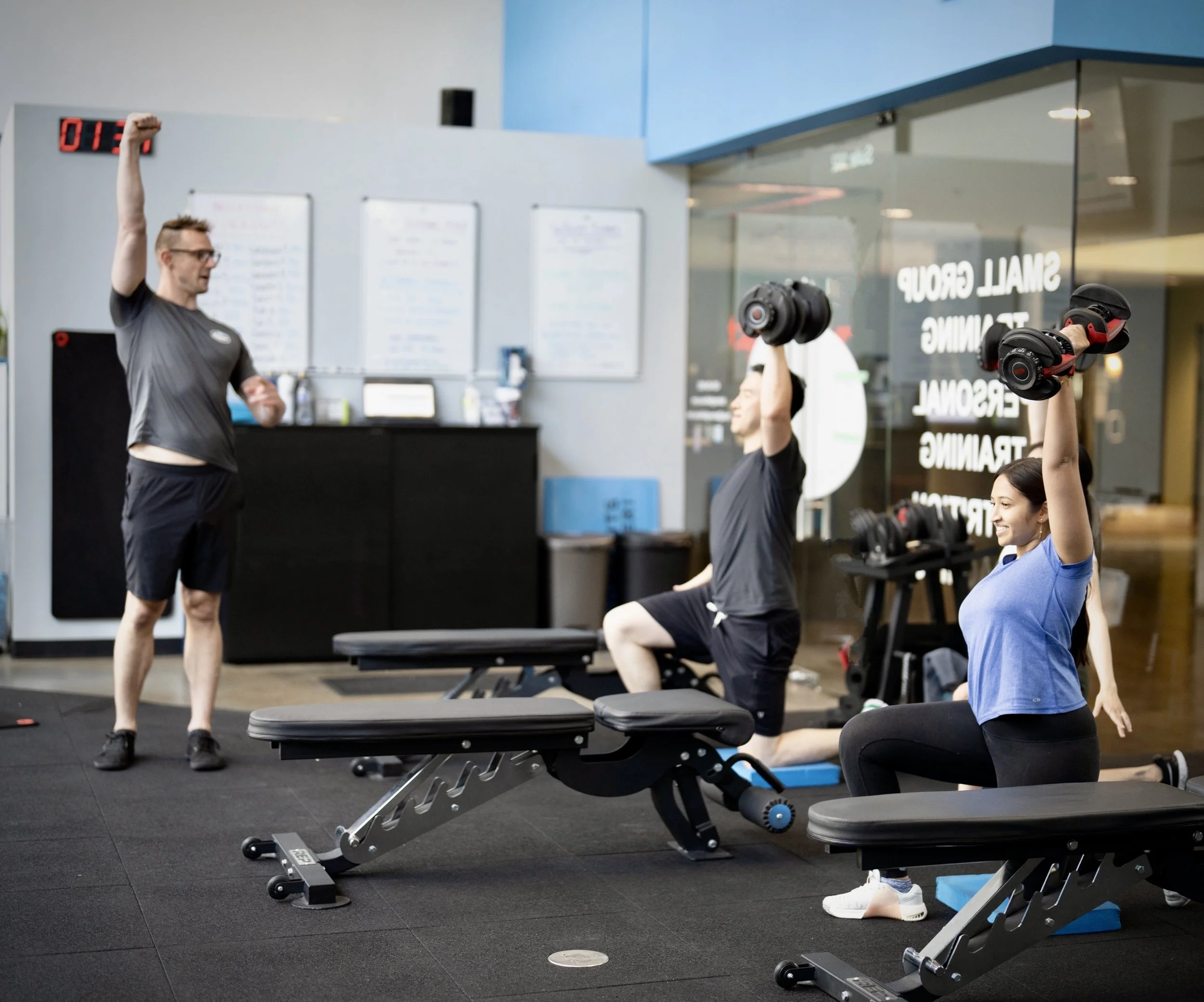
Small group personal training is the middle ground between training on your own and 1-on-1 personal training. It's a progressive plan, a coach watching your form and helping you progress, and a small group environment that makes it easier to show up.
It's not a large group fitness class where everyone does the same thing at the same pace. It's not 1-on-1 pricing either. It's individualized coaching in a small group - typically 2-6 people - where movements and weights are adjusted to each person.
What to look for when touring gyms in Bellevue or Redmond
Bring this list when you visit:
Do they assess you up front? Do they learn about your goals, experience, and any limitations before you start?
Is there a progression plan? Ask: "How do you help people get stronger over time?" - not just "do you have a plan."
How do they coach form in the moment? Ask what coaching looks like during a session, not just whether they "care about form."
How do they scale for beginners? You should be able to start without needing to already be in shape.
Is the schedule realistic for your life? The best program is the one you can repeat on your actual calendar, not an ideal one.
What accountability exists? Ask: "If I miss a week, what happens?" The answer tells you a lot.
Are results tracked? Strength progress, consistency, and body composition over time - not just attendance.
Common concerns - answered directly
"I'm out of shape." That's the point. A good program starts where you are and builds from there. You don't need to get in shape before you start training.
"I don't have time." You don't need five days a week. Most busy adults do best with 2-3 sessions per week at consistent times, treated like appointments.
"I'm nervous." That's completely normal. Most people are. A good program makes you feel comfortable in the first week, not overwhelmed. If you feel out of place from day one and it doesn't improve, that's a sign the environment isn't right for you.
"Is this CrossFit?" Different thing. CrossFit is typically larger group classes with a specific training style. Coached small group personal training is more individualized, adjusted to each person in real time, and progresses at a pace that fits the individual.
"Is this just for weight loss?" No. A solid program focuses on strength, energy, and consistency first. How your body changes is a result of showing up consistently and training well - not the starting premise.
What this looks like at bStrong
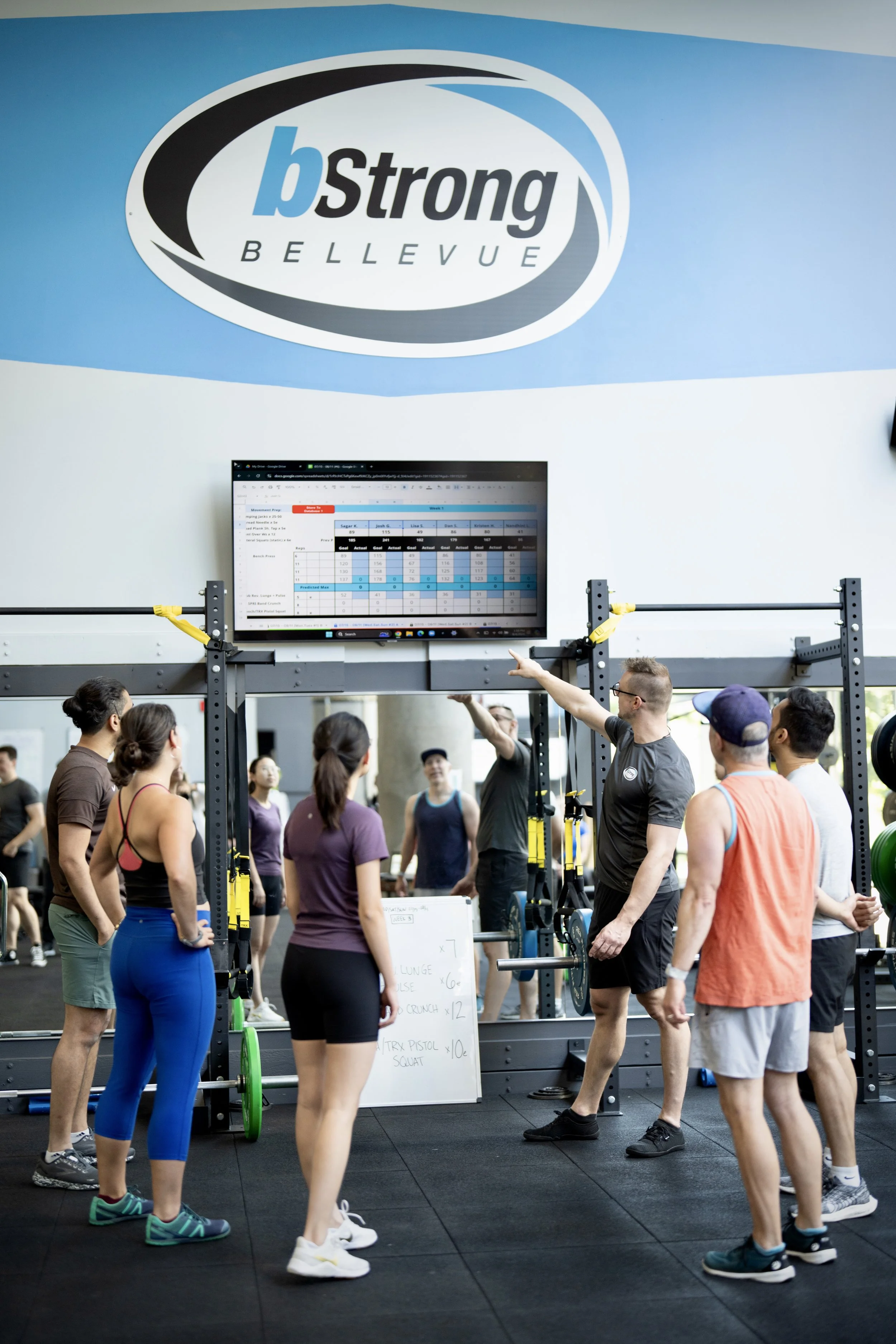
At bStrong in Bellevue and Redmond, coached small group personal training is the whole model. You show up, your coach guides the session, and everything is adjusted based on how you move and feel that day. Your weights are tracked session to session so you're not guessing what to do each week - when a movement comes back, you have a clear target based on what you did last time.
Groups stay small (2-6 people) so your coach can actually watch you move and give specific feedback in real time. Sessions run 50 minutes. The program is structured, not random.
Frequently asked questions
Do I need experience before joining?
No. Most people start as beginners or are returning after time away. The consultation call before your first session covers your history and any limitations, and the Intro Ramp-Up session gets you familiar with movements before the regular training schedule begins. You don't need to meet any fitness threshold to start.
What's the real difference between a gym and coached training?
A gym gives you access and equipment. Coached training gives you a plan, progression, and someone watching you move and helping you improve. Access works well for people who already know what to do. Coaching matters when you want to stop guessing.
Is small group personal training like group fitness classes?
No. Group fitness classes typically run everyone through the same workout at the same pace. Small group personal training adjusts movements, weights, and intensity to each individual within the group. Your coach is there for the full session, not leading a class from the front.
How many times per week should I train?
Two to three times per week is the right starting point for most busy adults. That's enough to make real progress and build consistency without requiring a schedule that falls apart when life gets busy. Same days and times each week works better than trying to fit it in whenever there's a gap.
Can I try it before committing to a membership?
Yes. The 3-week trial is specifically designed for this - it gives you a real experience of coached training before any long-term decision. For more on what that experience includes, read our return-to-fitness guide.
How is this different from a big-box gym like LA Fitness or Crunch?
Big-box gyms offer open access to equipment and classes, usually at a low monthly cost. The tradeoff is that you're largely on your own - no progression plan, no one watching your form, and no accountability when you stop showing up. That works well for self-directed people and less well for people who've started and stopped before. For a direct comparison, read our bStrong vs LA Fitness post and bStrong vs Crunch post.
Choosing a gym shouldn't feel like a gamble. If you're unsure, the best next step is to try something structured and see how it fits.
Our 3-week trial is $99 and includes a consultation call, an Intro / Ramp Up session, 6 coached small group personal training workouts, an InBody scan, and practical nutrition resources at our Bellevue and Redmond locations. No long-term commitment - just a chance to see if it fits your life.