
Feeling Stiff in Your 40s? Strength Helps More Than Stretching
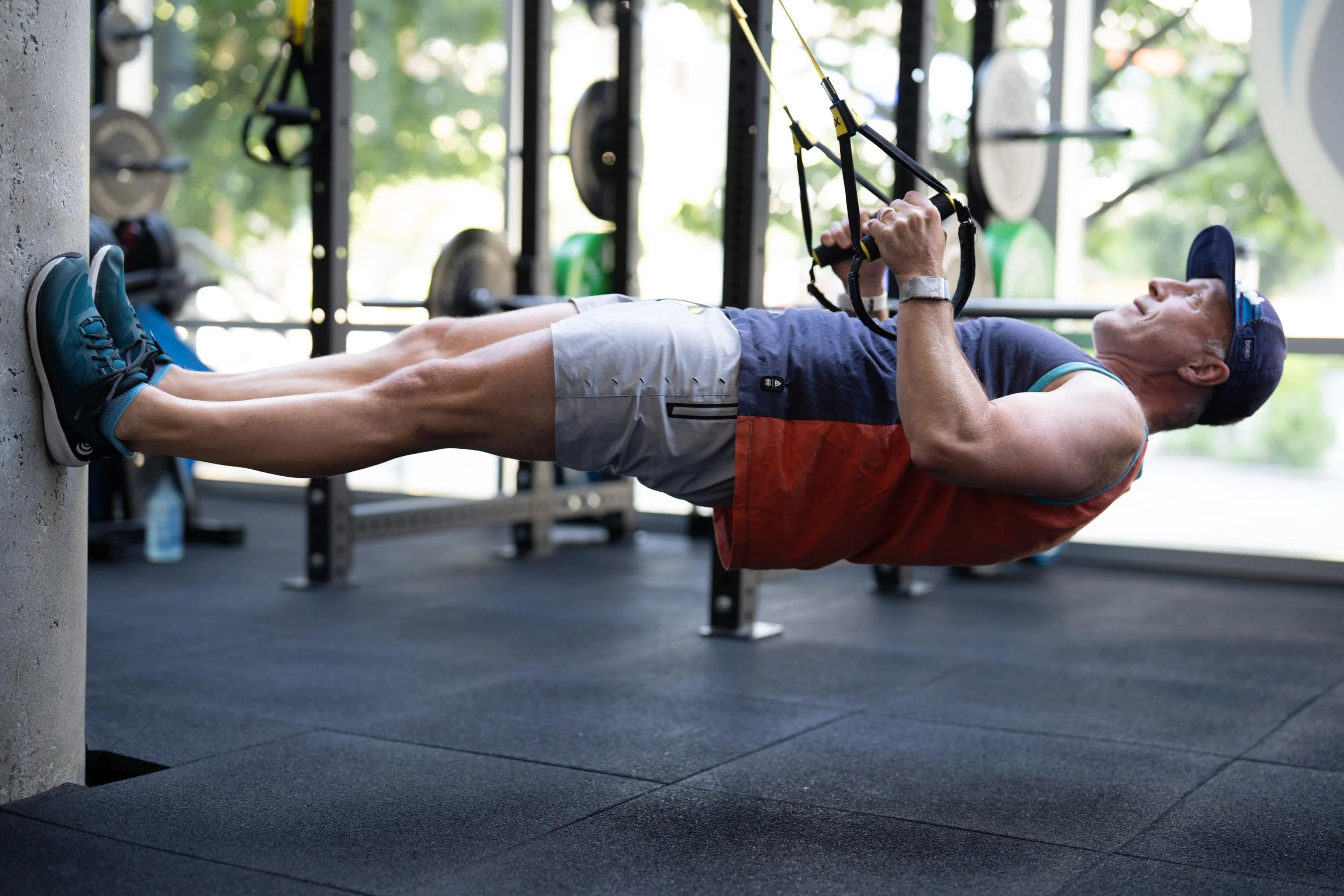
You wake up feeling creaky.
Your hips feel tight when you stand up from the couch.
Your shoulders complain every time you reach overhead.
So you stretch. Hamstrings, hip flexors, shoulders. You feel a little better for a few minutes… and then everything tightens up again.
If that sounds familiar, you’re not broken. But it’s a sign that stretching alone isn’t solving the real problem.
For most busy adults in their 40s and beyond, smart strength training will do more for stiffness than another 15 minutes of random stretching.
Why You Feel Stiffer in Your 40s (Even If You Stretch)
A lot of people assume stiffness = “I just need to stretch more.”
The reality is usually more like:
Your body feels stiff because it doesn’t feel strong or stable in certain positions.
1. You Sit More Than You Think
Most of our members in Bellevue and Redmond:
sit at a desk or in meetings most of the day
sit in the car or on a bus
sit on the couch at night
Over time, that means:
hips, hamstrings, and hip flexors feel locked up
upper back is stuck in a rounded position
shoulders don’t like reaching overhead anymore
You can absolutely loosen this up, but it takes more than a quick hamstring stretch a couple times a week.
2. You’ve Lost Some Muscle and Strength
After your 30s, muscle mass and strength tend to slide unless you train them on purpose.
Less strength around a joint often shows up as “tightness,” because your body doesn’t feel safe in certain ranges of motion. So it tightens things up to protect you.
Common spots:
hips (especially if glutes and hamstrings are weak)
shoulders (if upper back and rotator cuff are undertrained)
lower back (if core and hips aren’t supporting well)
3. Your Nervous System Is Guarding
Stiffness isn’t just a muscle issue. Your nervous system is involved too.
If your brain isn’t confident you can control a position, it might:
limit how far you can move
make muscles feel “tight” at the end of a range
send a little warning discomfort to keep you from going further
Stretching can temporarily calm that down, but without better strength and control, the stiffness usually comes back.
4. Stretching Helps, but It’s Not the Main Fix
Stretching can be useful:
as part of a warm-up
to calm things down after a long day
to help you feel where your body is tight or limited
But if you never follow it with loaded movement (think squats, rows, split squats, carries), you’re not giving your body a reason to stay loose and strong in those positions.
Tight muscles are often weak and under-used, not just short.
How Strength Training Actually Helps You Feel Looser
The goal isn’t to turn you into a powerlifter. The goal is to build enough strength and control that your body doesn’t have to lock itself up all the time.
Here’s what actually helps:
1. Strength Through a Comfortable Range of Motion
Instead of forcing yourself into painful stretches, we use:
squats and split squats for hips, knees, and ankles
rows and presses for shoulders and upper back
hinges (like deadlifts or RDLs) for hamstrings, glutes, and low back support
You move through a controlled range of motion under load, which teaches:
muscles to work through that range
joints to tolerate that position
your nervous system that it’s safe to be there
Over time, that feels like: “Wow, I can get lower into this movement without everything grabbing.”
2. Building the Right Muscles Around Stiff Joints
Some examples:
Stiff hips? We focus on glutes and hamstrings (squats, hinges, bridges, split squats).
Stiff shoulders? We train rows, face pulls, presses, and upper back work.
Stiff low back? We build core and hip strength so your back isn’t doing all the work.
You can still stretch if it helps, but the main fix is teaching those muscles to do their job.
3. Controlled Tempo Instead of Rushing Reps
Fast, sloppy reps often make stiffness worse because:
you bounce at the bottom of movements
you never really own the range of motion
your body stays in “bracing against danger” mode
Controlled tempo (especially on the way down) gives your joints time to adapt and your brain time to relax into the movement.
4. Consistency: 2–3 Strength Sessions per Week
You don’t need to lift every day.
For most of our members in their 40s and 50s, the sweet spot is:
2–3 full-body strength sessions per week
plus walking, light movement, and some mobility on the side
That’s enough to see real changes in stiffness and strength, as long as the training is:
well programmed
actually progressed week to week
adjusted when your body feels more tender or tight
If you want a deeper dive on how to structure this, check out Beginner Strength Blueprint.

What This Looks Like at bStrong
At bStrong, your training is highly coached, full-body small group personal training that gives you individualized adjustments, structured programming, and safe, effective sessions that actually fit your life.
We work with a lot of people who:
are in their 40s, 50s, or beyond
sit most of the day
feel stiff, achy, or “older than they’d like”
are nervous about lifting weights because of past pain or injury
Here’s how we handle stiffness specifically at our Bellevue and Redmond gyms (and with many members who live or work in Kirkland and around the Eastside):
We start by seeing how you move.
On your intro and early sessions, your coach watches how your hips, shoulders, and back handle basic patterns: squats, hinges, pushes, pulls, and carries.We pick variations that match your body right now.
That might mean a box squat instead of deep squats, elevated split squats, dumbbell presses instead of overhead work, or supported rows.We track your weights and reps every session.
You’re not guessing. We log what you lifted and how many reps you did.Your workout and target weights are up on the TV when you walk in.
You see your name, exercises, and starting weights on the screen. Your coach uses that to say things like:
“Last time you did 3 sets of 8 at this weight. Today we’re going a little heavier or adding a rep if it feels good.”We adjust on stiff or sore days.
If you say, “My hips feel really tight today,” we might:shorten the range of motion
pick a friendlier variation
slow the tempo and focus on control
back off the load for that movement
The goal isn’t to push through stiffness at all costs. The goal is to give your body safe, repeatable reps so it gradually trusts those positions more.
If you want to connect the dots on form and safety, you might also like How to Lift Safely and Return to Fitness Guide.
To dig into the recovery side, check out Recovery: The Key to Better Workouts and Injury Prevention and Recovery for Strength: Why Sleep Is Your Superpower.
How Beginners in Their 40s Can Start (Without Feeling Broken)
You don’t need to overhaul your whole life. Start simple.
Step 1: Commit to Strength 2–3 Times per Week
For the next 4–8 weeks, aim for:
2 full-body strength sessions every week as your minimum
3 sessions if your schedule allows
That’s enough to noticeably change how your body feels, especially if the workouts include:
squats or squat variations
hinges (like RDLs or hip hinges)
upper body pushes and pulls
some core work and carries
Step 2: Pick Movements That Feel Safe (Not Scary)
Good starting points if you’re stiff:
box squats or supported squats
dumbbell RDLs with a short range of motion
elevated split squats (holding on to support if needed)
dumbbell bench press or incline press
1-arm rows and band rows
farmer carries or suitcase carries
If you’re nervous about getting started, [How to Lift Safely] and [Return to Fitness Guide] are both good next reads.
Step 3: Use a Controlled Tempo
Instead of bouncing:
2–3 seconds down
slight pause at the bottom
controlled drive up
This gives joints and tissues time to adapt and helps your nervous system relax into the movement instead of resisting it.
Step 4: Pair Strength with Light Daily Movement
This doesn’t have to be perfect:
5–10 minute walks during the day
occasional short mobility flows for hips and shoulders
standing more often instead of sitting for hours at a time
You’re teaching your body, “We move now. We don’t just sit and stiffen up.”
What to Expect in 4–8 Weeks
Everyone is different, but if you’re strength training 2–3 times per week and moving a bit more during the day, you can usually expect:
getting up from chairs feels easier
less “cement legs” feeling in the morning
hips feel better going up stairs or hills
shoulders complain less when reaching overhead or carrying groceries
fewer little twinges during normal daily movement
You may still have some tight areas (that’s normal), but overall:
you move more smoothly
your body feels more “awake” and responsive
you trust your joints more under load
Is This Right for You? (Checklist)
This approach is probably a good fit if:
you feel stiff in your hips, back, or shoulders most days
stretching helps a little, but the stiffness always comes back
you’re in your 40s or 50s and noticing more aches than you used to
you want to feel stronger and more mobile, not just “less tight”
you’d rather have a coach tell you what to do than build your own plan
you’re okay starting light and building up gradually
You should talk with a medical professional first if:
you have sharp, shooting, or worsening pain
you’re dealing with numbness, tingling, or major weakness
you’ve had a recent surgery or major injury that isn’t cleared yet
Once you’re cleared to train, good coaching + smart strength is usually one of the best tools you have to feel less stiff and more capable.
Ready to Feel Less Stiff and Stronger? Try the 3-Week Trial
If you live or work near Bellevue, Redmond, or around the Kirkland/Eastside area and want help with stiffness, strength, and confidence in the gym, our 3-week trial is the best way to get started.
During your 3-week trial, you’ll get:
a quick intake call so we understand your body, your history, and your goals
an Intro / Ramp Up session to learn the basics with a coach
small group personal training 2–3 times per week
workouts and target weights laid out on the TV when you walk in
coaches who adjust things when your hips, back, or shoulders feel tight
You don’t have to “stretch everything out” before you’re allowed to lift. You get stronger, move better, and feel less stiff by training in a way your body can actually handle – with a clear plan and a coach in your corner.